The best toy is not always the one with the most buttons, the biggest box, or the loudest excitement on gift-opening day. It is the one your child can use safely, return to often, and enjoy in a way that fits where they are right now. This guide to age appropriate toys can help you shop with more confidence, whether you are choosing a first baby gift, refreshing a toddler play area, or finding something special for a growing kid.
Age labels are a helpful starting point, but they are not the whole story. Children develop at different speeds, and a toy that delights one 3-year-old may frustrate another. Look at your child’s interests, skills, and supervision needs alongside the recommended age range. The goal is simple: choose playthings that feel fun today while leaving room for new skills tomorrow.
Play is how young children test ideas, practice movements, and build confidence. A baby reaches for a textured toy and learns about grip. A toddler stacks blocks, watches them tumble, and tries again. An older child turns a pretend kitchen or set of figures into a whole story with rules, characters, and problem-solving.
When a toy is too advanced, a child may lose interest quickly or need constant adult help. When it is too simple, it may not hold their attention for long. That does not mean every toy must be educational in a formal sense. Open-ended toys, silly dress-up pieces, and outdoor play favorites all support development when they invite children to move, imagine, create, or connect with others.
Safety is the other essential piece. Small detachable parts, sharp edges, weak construction, and toys meant for older children can create risks for babies and young toddlers. Check the manufacturer’s age guidance, inspect toys regularly, and keep older siblings’ tiny accessories in a separate spot.
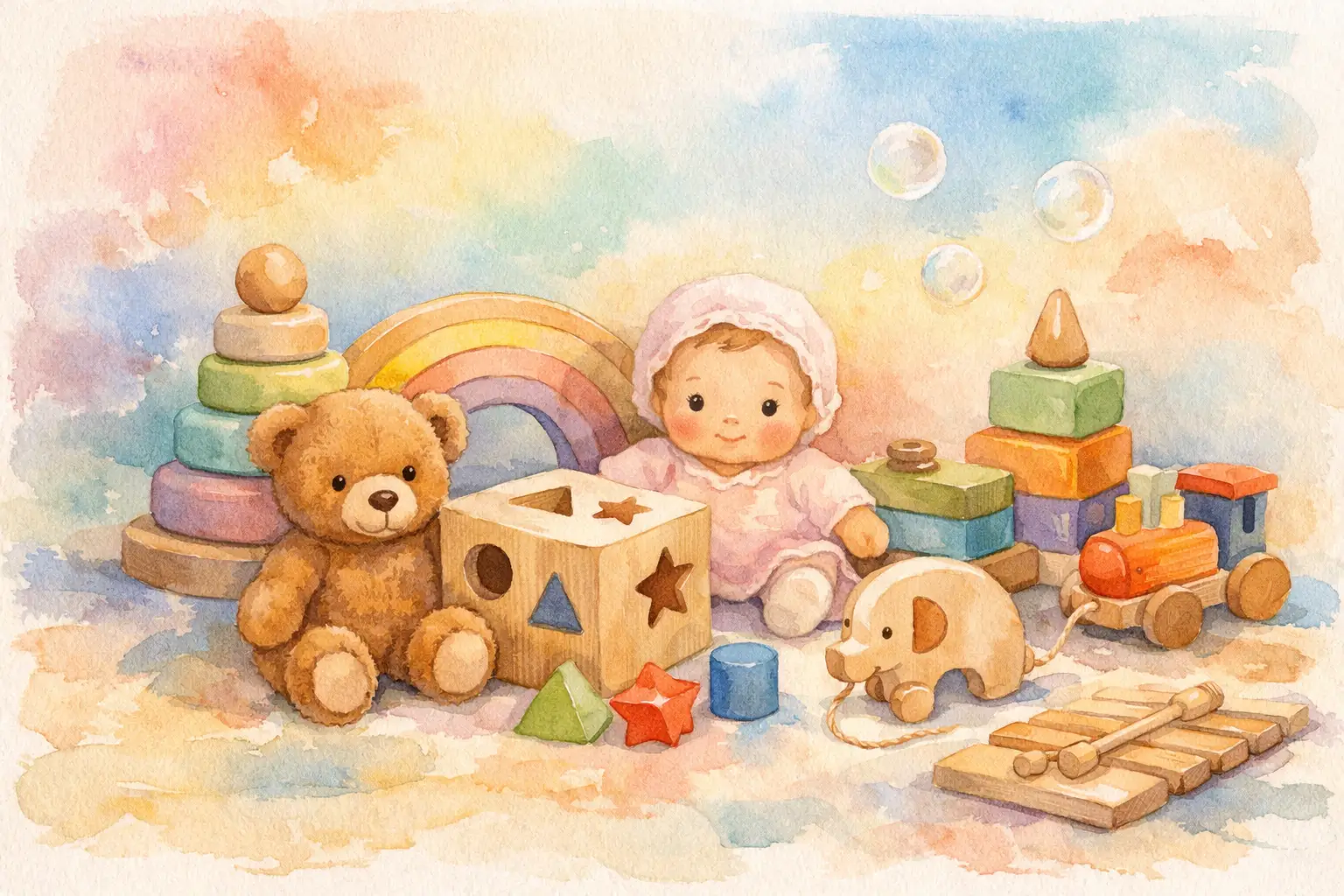
For babies, play is largely sensory and movement-based. They are learning to track objects with their eyes, grasp with their hands, explore textures, and respond to sounds. Soft books, rattles, cloth toys, teething-friendly options, and simple activity mats are practical choices for this stage.
Look for toys that are easy to hold, washable, and free from small pieces. High-contrast patterns can capture a young baby’s attention, while soft textures and gentle sounds offer interesting sensory experiences. As babies begin sitting and crawling, lightweight balls, stackable cups, and push-and-roll toys can encourage movement without asking too much of them.
Avoid choosing toys based only on claims that they will make a baby smarter or teach advanced skills early. A safe toy that encourages reaching, kicking, babbling, or shared play with a caregiver is doing plenty. Your face, voice, and attention are still the most meaningful parts of playtime.
Toddlers are busy, curious, and determined to do things independently. They love toys that let them repeat an action, make a choice, or imitate the adults around them. Chunky puzzles, nesting toys, large building blocks, toy vehicles, pretend food, and simple musical toys are often big hits.
This is also the stage when pretend play begins to bloom. A toy phone, doctor kit, mini tool set, or doll accessory can turn everyday routines into imaginative adventures. These toys help children practice language and social understanding as they act out what they see at home, at daycare, or on family outings.
Choose sturdy toys designed for enthusiastic use. Toddlers may throw, drag, climb on, and carry their favorites everywhere. They also still mouth objects, especially younger toddlers, so keep small parts and button batteries completely out of reach. A toy labeled for ages 3 and up may not be right for a child who is still exploring with their mouth.
Preschoolers are ready for more detailed pretend play, early problem-solving, and hands-on creative projects. They may enjoy beginner board games, dress-up accessories, larger craft supplies, building sets, play kitchens, dolls, action figures, and puzzles with more pieces.
At this age, children often have strong preferences. One child may spend an hour arranging animal figures, while another wants to race cars across the living room floor. Follow those interests instead of shopping only by gender or what seems traditionally appropriate. A child who loves construction may enjoy a dollhouse because it offers decorating and storytelling. A child who loves fashion may also enjoy a science kit with bright colors and real experiments designed for their age.
Creative toys are especially valuable because there is no single right answer. Washable crayons, modeling dough, reusable stickers, and simple art sets let kids make choices and build fine motor skills. For messier activities, consider your available space and cleanup routine. The best craft is one your family can enjoy without dreading the aftermath.
School-age children are often ready for toys with more rules, strategy, and challenge. They may enjoy more complex building sets, card games, science activities, sports gear, beginner coding or robotics toys, and craft kits that create a finished project.
This stage is a great time to choose toys that grow with a child. Building systems with expandable pieces, art supplies that support new techniques, and games with adjustable rules can stay useful longer than a one-time novelty. Kids also begin to care more about sharing their interests with friends and siblings, so cooperative games and outdoor activities can add a social element to play.
Still, challenge should feel encouraging, not discouraging. If a kit has too many difficult steps or a game takes an hour to explain, it may stay unopened. Consider whether your child enjoys working independently, prefers teamwork, or needs a quick win before taking on a bigger project.
A recommended age range addresses safety and typical skills, but a thoughtful choice also considers your child’s personality. Ask what they return to again and again. Do they line up cars, build towers, care for stuffed animals, ask how things work, or turn couch cushions into an obstacle course? Their everyday play gives you better clues than a trending toy list.
Think about how the toy will fit into real family life, too. Large play furniture can support years of imaginative fun, but it needs room to stay accessible. A noisy electronic toy may thrill one child and overwhelm another household. Small sets can be excellent for travel or quiet time, though they require a reliable storage plan if younger siblings are nearby.
Price matters, and more expensive does not automatically mean more engaging. A few versatile items that invite different kinds of play often provide better value than a pile of single-purpose toys. Consider durability, replacement pieces, ease of cleaning, and whether the toy can be used in more than one way.
Before adding a toy to the cart, take a moment to check the age recommendation and product details. For babies and toddlers, avoid small parts that could become choking hazards. For all ages, look for materials and construction that can handle regular use, especially with ride-on toys, furniture, and outdoor play items.
Keep batteries secured behind screwed compartments, follow assembly instructions carefully, and check toys from time to time for loose parts, cracked plastic, frayed fabric, or damaged straps. If a toy is being passed down from an older sibling, confirm that it is still complete and in good condition. A favorite toy can be loved for years, but worn-out pieces deserve retirement.
You do not need a perfectly stocked playroom to support a child’s development. A small, thoughtful mix of active toys, creative materials, books, and pretend-play favorites can go a long way. Rotating a few toys every couple of weeks can also make familiar items feel fresh without adding more clutter.
At Everything Childrens Outlet, families can find joyful, practical picks for different stages of childhood, from early sensory play to creative activities for growing kids. Choose what matches your child’s current interests, keep safety at the center, and leave a little room for the surprise of seeing where their imagination takes it next.