A sunny stroller walk can feel like the perfect family moment, but baby skin needs more protection than adult skin. If you are wondering when should babies wear sunscreen, the answer depends mostly on age, how much direct sun they may get, and whether shade and protective clothing are available.
For the youngest babies, sunscreen is not the first line of defense. For older infants, it becomes a helpful part of a simple sun-safety routine that also includes shade, lightweight clothing, and a hat. Here is how to make confident, practical choices before you head outside.
Babies younger than 6 months should be kept out of direct sunlight as much as possible. Their skin is very delicate, they can overheat quickly, and they have more body surface area relative to their size than older children and adults. That means both sun exposure and product ingredients can affect them more easily.
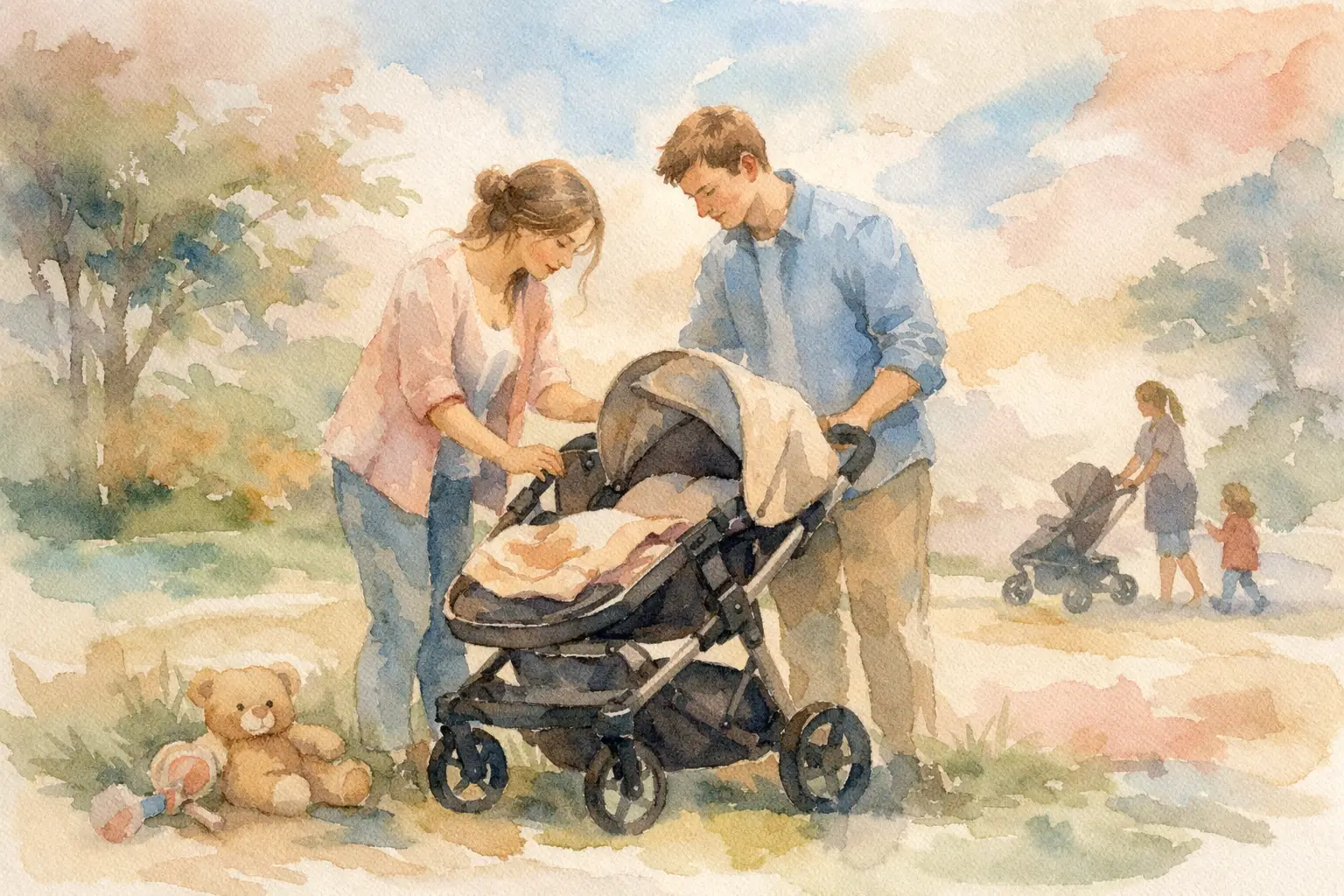
Plan outdoor time around shade whenever you can. A covered porch, tree shade, a stroller canopy, or a beach umbrella can make a big difference. Keep in mind that a stroller canopy may not block sun coming in from the sides, and air needs to circulate freely. Never cover a stroller completely with a blanket, since that can trap heat inside.
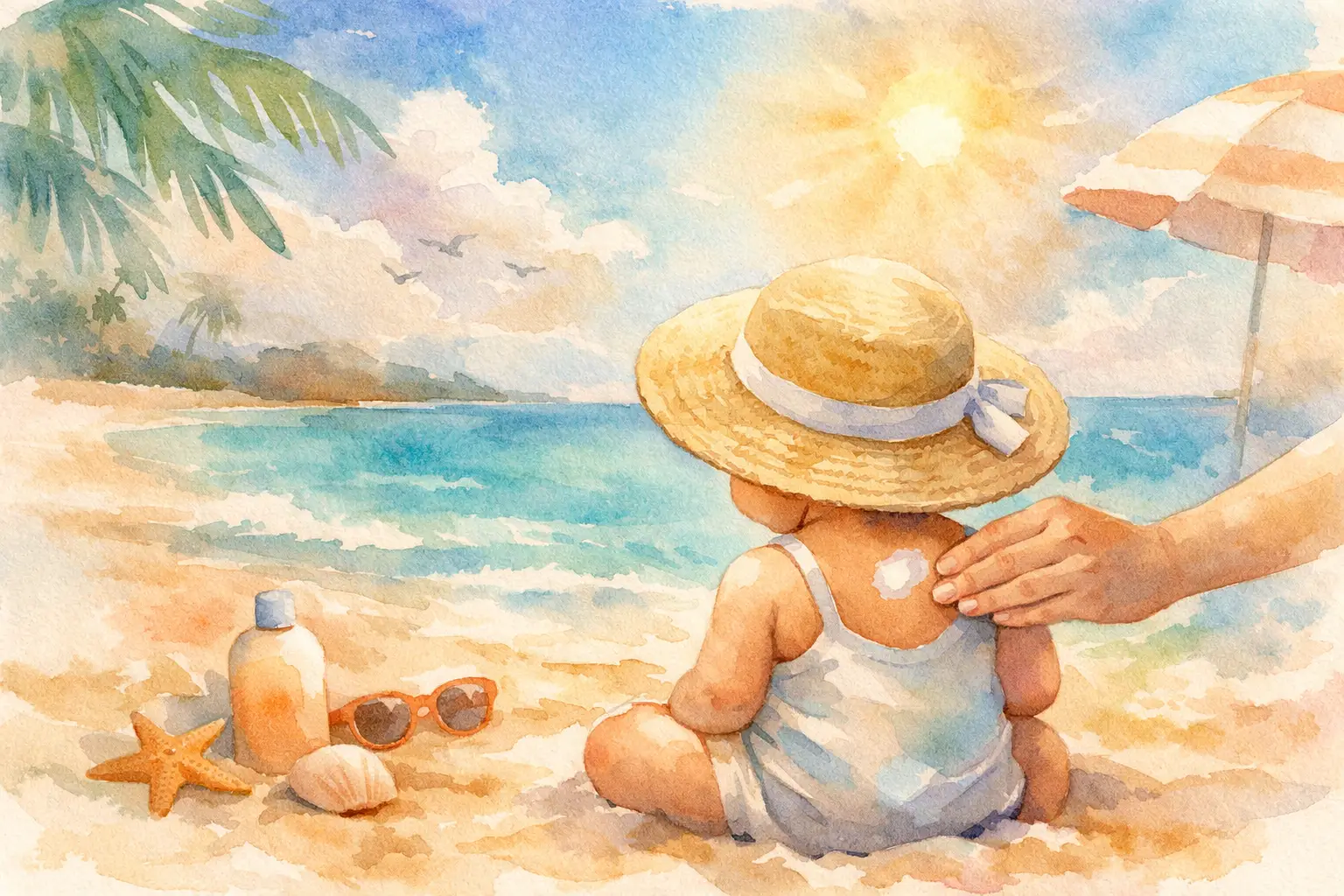
Dress your baby in loose, lightweight clothing that covers the arms and legs when the weather allows. A soft, wide-brimmed sun hat that shades the ears and back of the neck is especially useful. Choose breathable fabrics so your little one stays comfortable, and offer feeds regularly during warm outings.
When shade and clothing are not available, such as during an unexpected walk from the car or an unavoidable outdoor event, pediatric guidance allows parents to use a small amount of sunscreen on small exposed areas, such as the backs of the hands, tops of the feet, and face. This is a backup plan, not a reason to place a young infant in direct sun for long periods.
A mineral sunscreen containing zinc oxide or titanium dioxide is often a practical choice for little skin because these ingredients sit on the skin’s surface and block or scatter UV rays. Use only what is needed, avoid the hands if your baby is likely to rub their eyes or mouth, and keep watching for signs of overheating.
Once your baby is 6 months old, sunscreen should be part of outdoor care whenever they will be exposed to the sun. That includes a neighborhood walk, an afternoon at the park, a backyard playdate, a pool day, or a family vacation. UV rays can reach skin on cloudy days too, so a gray sky does not always mean sunscreen can stay in the diaper bag.
Choose a broad-spectrum sunscreen with SPF 30 or higher. Broad-spectrum means it protects against both UVA rays, which contribute to skin damage, and UVB rays, which cause sunburn. For babies and young children, many families prefer fragrance-free mineral formulas with zinc oxide or titanium dioxide, especially if a child has sensitive skin.
Sunscreen is helpful, but it does not make direct midday sun risk-free. Whenever possible, combine it with a hat, sunglasses designed for children if your baby will tolerate them, lightweight sun-protective clothes, and breaks in the shade. This layered approach is more reliable than depending on any one product alone.
Apply sunscreen about 15 minutes before heading outdoors, following the product label. Use enough to create an even layer, rather than a thin, barely visible swipe. Parents often remember cheeks and arms but miss easy-to-burn spots such as the ears, hairline, neck, shoulders, tops of the feet, and backs of the knees.
For the face, put a small amount on your own fingers first, then carefully smooth it onto your baby’s skin. Keep sunscreen away from the eyes, lips, and inside of the hands. If it does get into the eyes, rinse gently with clean water.
Reapply at least every two hours while outdoors. Reapply sooner after swimming, sweating, toweling off, or playing in water. A water-resistant sunscreen is useful for pool and beach days, but no sunscreen is fully waterproof. Check the label for whether it protects for 40 or 80 minutes in water.
Spray sunscreen can be convenient for wiggly toddlers, but creams and lotions are usually easier to control on babies. Sprays can be inhaled, and windy conditions can make it difficult to apply an even amount. If you use a spray for an older child, spray it into your hands first, then rub it onto their skin rather than spraying near their face.
You do not need to skip every sunny outing. A few small adjustments can make outdoor time safer and more enjoyable. Try to schedule longer outdoor plans before 10 a.m. or after 4 p.m., when the sun is often less intense. Midday is still manageable, but it calls for extra shade, frequent cooling breaks, and closer attention.
At the pool or beach, water, sand, and concrete can reflect sunlight onto areas that seem covered. Reapply sunscreen faithfully, keep a dry change of clothes nearby, and give your baby regular breaks under an umbrella or covered area. A rash guard or swim shirt adds comfortable coverage and can reduce the amount of skin that needs sunscreen.
For errands and stroller walks, use the canopy properly, dress your baby for the temperature, and take the route with more shade if you have a choice. Avoid leaving a baby in a parked car, even briefly. Cars heat up very quickly, and vehicle windows do not provide complete protection from UV exposure.
Sun safety is about more than preventing a red nose. Babies can become overheated before parents realize it, particularly in humid weather. Move into a cool place right away if your baby seems unusually fussy, sleepy, weak, flushed, or sweaty. Offer breast milk or formula more often, and call a health professional if you are worried about how your child is acting.
If your baby gets sunburned, move them out of the sun immediately. Cool, damp cloths may soothe mild discomfort, and regular feeds can help support hydration. Contact your pediatrician promptly for a baby under 1 year with a sunburn, especially if there are blisters, fever, chills, significant pain, or a change in alertness.
Keeping a few essentials ready makes last-minute outings easier. Pack a broad-spectrum SPF 30+ sunscreen for babies 6 months and older, a sun hat, a lightweight cover-up or extra shirt, water for older babies and caregivers, and a portable shade option when practical. Add diapers, wipes, and a dry outfit for water days.
It also helps to check the UV forecast before a long outing. A higher UV level means skin can burn faster, even if the air does not feel especially hot. This quick check can help you choose more shade, shorter outdoor stretches, or a different time for the playground.
A little preparation gives your family more freedom to enjoy fresh air, splashy afternoons, and everyday walks. Keep shade, comfortable coverage, and age-appropriate sunscreen close at hand, then let your baby enjoy the bright, happy parts of childhood safely.