A stroller may look like a simple baby essential until you try to fit one in your trunk, fold it one-handed in a parking lot, or steer it over a cracked sidewalk with a sleepy baby aboard. Learning how to choose a baby stroller starts with your real routine, not a long list of fancy features. The best choice is one that helps your family get out the door comfortably, safely, and with less stress.
Before comparing colors, cup holders, or storage baskets, think about your most common trips. Will you use the stroller for neighborhood walks, quick errands, airport travel, daily daycare drop-offs, or long afternoons at the park? A stroller that feels perfect for one family can be frustrating for another because their days look different.
Families who walk often on uneven sidewalks, grass, or gravel usually benefit from larger wheels and a suspension system that absorbs bumps. These strollers can offer a smoother ride, but they are often heavier and take up more trunk space. For city errands, malls, and paved paths, a lightweight stroller with swivel front wheels may be easier to steer through narrow aisles and busy sidewalks.
Also consider the way you travel. If you regularly carry a stroller up apartment stairs, lift it into a compact car, or take it on public transportation, weight and fold size matter as much as ride quality. A stroller should make daily life easier, not become another bulky item to manage.
There is no single stroller style that works for every stage and every household. Knowing the basic options can make shopping feel much more manageable.
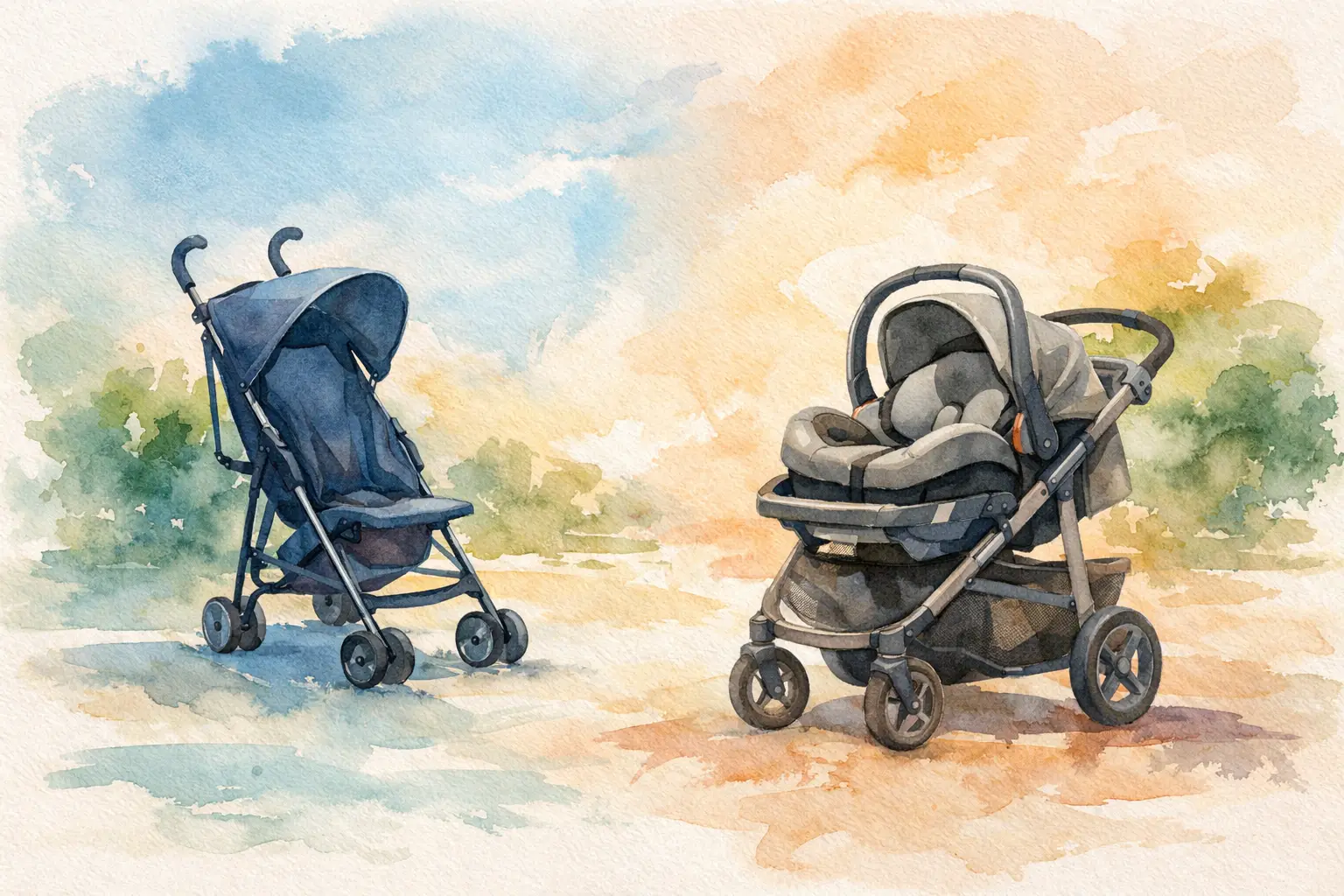
A full-size stroller is a popular everyday choice because it often includes a reclining seat, sun canopy, storage basket, and durable wheels. It may be the right fit if you want one main stroller for walks, errands, and family outings. Many models are designed to support a child from infancy through the toddler years, depending on the seat and weight limits.
A travel system pairs a compatible infant car seat with a stroller frame or stroller seat. This option can be especially helpful during the newborn stage, when moving a sleeping baby from the car without disturbing them feels like a small victory. Confirm that the car seat and stroller are designed to work together. Do not assume two products are compatible just because they are from the same brand.
A lightweight or umbrella stroller is convenient for quick trips and travel. It usually folds more easily and takes up less room, but it may have less storage, smaller wheels, and fewer comfort features. It is often a helpful second stroller once a child has reliable head and neck control, rather than the only stroller a family owns from day one.
Jogging strollers are built for active families who plan to run or cover longer distances. They typically have three larger wheels, improved suspension, and a fixed or lockable front wheel. A jogging stroller is not automatically suitable for jogging with a young infant, so always follow the manufacturer’s age and use guidance.
Double strollers are made for twins or siblings close in age. Side-by-side styles can provide equal seating space but may be wider at doorways. Tandem styles place one child in front of the other and are often easier to fit through tight spaces, though the seating arrangements and weight balance vary by model.
Convenient features are wonderful, but safety should guide every final decision. Look for a sturdy frame, reliable wheel locks, a secure braking system, and a five-point harness that fits your child snugly. The harness should be simple enough for an adult to adjust but difficult for a curious toddler to release.
Check the stroller’s age, height, and weight limits carefully. A bassinet attachment, infant car seat, reclining stroller seat, and upright toddler seat do not all support the same developmental stage. Newborns need proper head, neck, and body support. A stroller seat that reclines fully may be suitable from birth only if the manufacturer specifically says so.
A wide, stable base can reduce tipping risk, especially when a child shifts their weight. Still, even a stable stroller can tip if heavy bags are hung from the handles. Use the storage basket for diaper bags and essentials whenever possible, and engage the brakes every time you stop.
For sunny days, a generous canopy with good coverage helps protect little ones from harsh rays. For cooler weather, breathable fabrics and adjustable ventilation can help prevent overheating. Comfort and safety often work together when the stroller supports a child well in changing conditions.
A stroller may be comfortable for your child but impractical if you cannot fold it without a struggle. Look closely at the folding mechanism before you buy. Some strollers offer a one-hand fold, which can be useful when you are holding a baby or managing a toddler. Others require two hands but fold into a flatter, more compact shape.
Think about where the stroller will live between outings. Measure your trunk, entryway, closet, or garage space if storage is tight. A larger all-terrain stroller can be a great fit for weekend walks, but it may be inconvenient if it barely fits in your car. On the other hand, choosing the smallest possible stroller can lead to regret if its tiny wheels and limited seat make longer outings uncomfortable.
Pay attention to the stroller’s weight as well as its folded size. A few pounds may not sound significant in a product description, but they can feel very different when you are lifting the stroller repeatedly. If possible, practice lifting it with the seat attached and imagine doing it after a long grocery run.
Your baby’s comfort affects everyone’s outing. A supportive, padded seat, adjustable recline, and secure harness are useful basics. An adjustable footrest can also make a noticeable difference as your child grows from a small baby into a busy toddler with longer legs.
For parents and caregivers, handlebar height matters more than many shoppers expect. Taller adults may feel uncomfortable pushing a stroller with a low fixed handle, while an adjustable handlebar can make it easier for different caregivers to share. A responsive steering system is valuable too, especially if you will navigate curbs, crowded stores, or turns with one hand.
Storage is another everyday comfort feature. A roomy, easy-to-reach basket can hold diapers, wipes, snacks, a light blanket, and the little extras that seem to multiply on every outing. Parent trays and cup holders are handy, but they should not outweigh the essentials: a safe seat, smooth steering, and a stroller that fits your lifestyle.
It is easy to get drawn in by extra accessories, but the right budget depends on what you will use often. A rain cover may be worthwhile in a wet climate. A snack tray can be helpful for a toddler who spends time in the stroller. A reversible seat can be lovely for parents who want face-to-face time during the early months, but it may not be necessary for every family.
Instead of choosing based on the longest feature list, prioritize the features that solve a daily problem. If you walk your dog each morning, dependable wheels and a secure brake may be worth more than a premium fabric. If you fly to visit family, a compact fold and carry strap may offer more value than oversized storage.
Set a realistic budget, then compare safety, warranty coverage, materials, and expected years of use within that range. An affordable stroller can be an excellent choice when it meets your family’s needs well. Price alone does not determine whether a stroller will work for your child or your routine.
If you expect to use a stroller for siblings, look ahead before making your purchase. Some single strollers accept a ride-along board for an older child, while others can convert into double strollers with an additional seat. These options can extend usefulness, but conversion pieces add cost and may change how the stroller handles.
For twins, make sure each seat offers appropriate support and that the stroller’s total weight limit works for your children as they grow. Consider who will sit where, whether both seats recline, and how easily you can reach each child. A double stroller should feel balanced and manageable, not just technically capable of carrying two children.
The right stroller gives your family more freedom to enjoy everyday moments, from a calm walk around the block to a full day of errands. Choose the one that fits the life you actually lead, and you will have a dependable companion for many happy miles ahead.