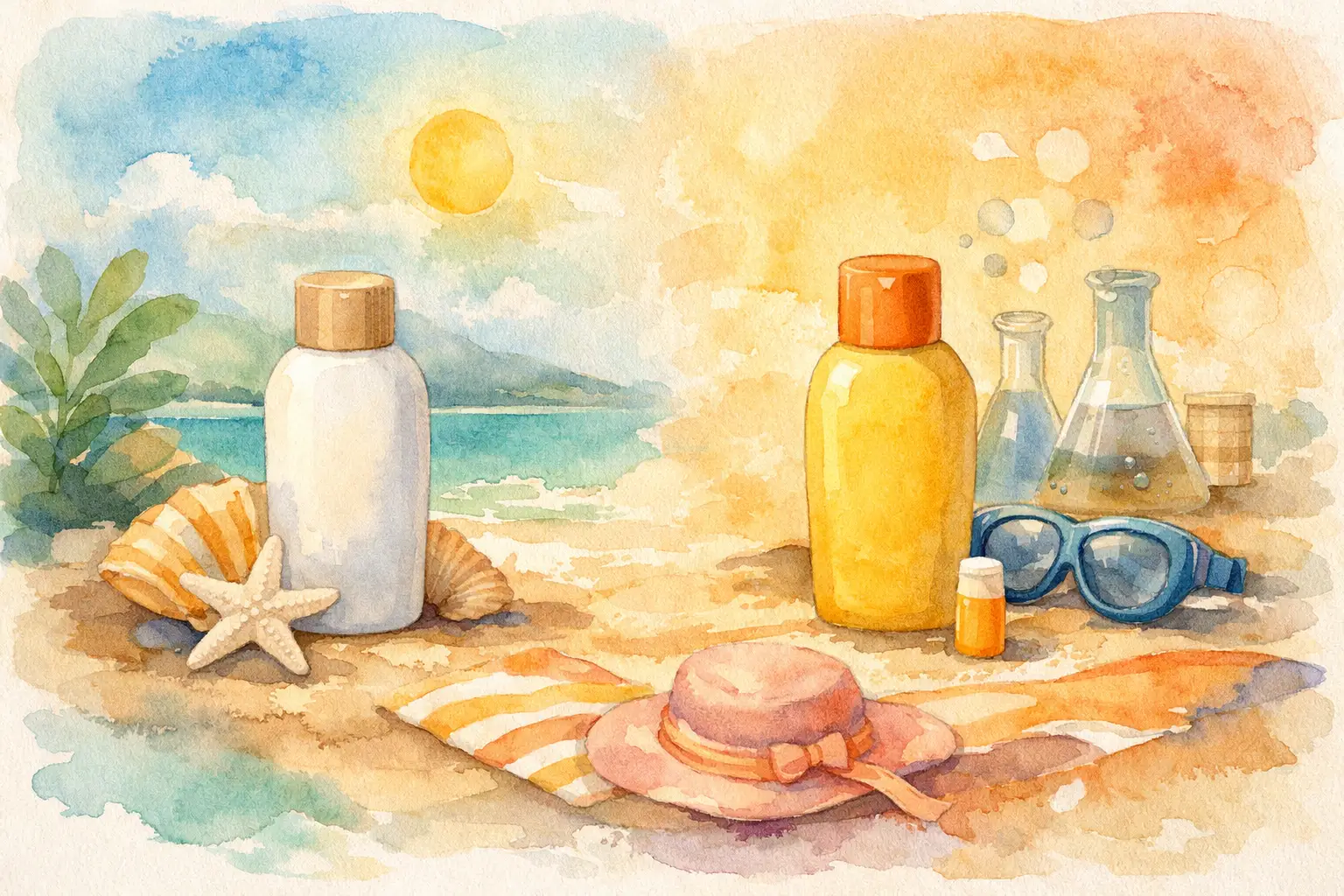
A sunscreen battle rarely happens in the sunscreen aisle. It happens five minutes before leaving for the pool, when a wiggly toddler dislikes the white cast or an older child complains that lotion stings their eyes. When choosing mineral vs chemical kids sunscreen, the best answer is usually the formula your child can wear comfortably and you can apply generously, every time they are outdoors.
Both types can help protect children’s skin when they are broad spectrum, SPF 30 or higher, and used correctly. The differences come down to the UV filters inside, how the lotion feels, your child’s skin needs, and the activities on your family calendar.
Mineral sunscreen, sometimes called physical sunscreen, uses zinc oxide, titanium dioxide, or both as its active ingredients. These filters sit on the skin’s surface and protect against ultraviolet rays. Zinc oxide is especially valued because it provides broad-spectrum coverage, meaning protection from both UVA rays that contribute to skin aging and UVB rays that cause sunburn.
Chemical sunscreen uses organic UV filters such as avobenzone, octisalate, octocrylene, homosalate, or octinoxate. These ingredients absorb UV energy in the skin and convert it into a small amount of heat. “Chemical” can sound alarming, but it does not automatically mean unsafe. Sunscreens sold for use in the United States are regulated, and families can choose from many options based on their child’s comfort and sensitivities.
The practical difference is easy to spot during application. Mineral formulas often feel thicker and may leave a white or slightly tinted cast, particularly on deeper skin tones. Chemical formulas are often lighter, clearer, and easier to blend into skin and hairlines. That can make daily reapplication less of a struggle for busy kids and parents.
Many parents start with mineral sunscreen for babies and young children, especially when their child has sensitive skin, eczema-prone skin, or a history of reacting to personal-care products. Zinc oxide and titanium dioxide are generally gentle choices, and mineral formulas are less likely to run into a child’s eyes and cause stinging, though every formula is different.
Mineral sunscreen can also be a practical pick for close-up areas that get missed or rubbed often: the ears, nose, cheeks, back of the neck, and tops of the feet. A thicker texture can make it easier to see where you have already applied it. For little ones who will not sit still, that visible coverage can be a real advantage.
The trade-off is that a mineral lotion may take more time to rub in. If a child dislikes the feel of heavy lotion, or if the formula leaves a noticeable cast, they may resist wearing it. A sunscreen that stays in the bottle does not protect anyone, so look for a texture your family can use without a daily debate.
Chemical sunscreen can be a strong everyday choice for school-age children who need something quick, lightweight, and easy to reapply. Clear formulas can be especially helpful for kids with deeper skin tones, active children who dislike thick creams, and families trying to cover a lot of skin before camp, practice, or a beach day.
These formulas often layer well under clothing and are less noticeable once applied. For a child who needs sunscreen before walking to school, playing at recess, and staying outside after dinner, an easy-to-spread lotion may make consistent use much more realistic.
The main consideration is sensitivity. Some children find certain chemical formulas irritating, especially around the eyes or on broken, dry, or eczema-affected skin. Fragrance can also be a culprit, no matter which kind of sunscreen you choose. If your child has reacted to sunscreen before, consider a fragrance-free formula and test a small amount on the inner arm before a full day outside.
Mineral or chemical is only one part of a smart sunscreen choice. Start with broad-spectrum protection and SPF 30 or higher. Broad spectrum matters because children need coverage from both UVA and UVB rays, not just protection from visible sunburn.
Water resistance is another useful label for splash pads, pool days, sweaty playground afternoons, and sports. No sunscreen is waterproof or sweatproof. A water-resistant label will say whether protection lasts for 40 or 80 minutes in water or while sweating. Reapply based on that time, and always reapply after towel drying.
For most family routines, these label details are worth checking:
Sunscreen sticks are handy for faces, ears, and quick touch-ups, but they can leave gaps if they are only swiped on once. Make several passes and rub the product in for even coverage. Sprays can be convenient for legs and arms, but use them outdoors or in a well-ventilated area, keep spray away from the face, and apply spray to your hands before putting it on a child’s face.
Even an excellent formula needs enough product to provide the SPF listed on the bottle. For a child in shorts and a T-shirt, use a generous amount on all exposed skin. Do not forget the scalp along the part line, ears, lips with an appropriate SPF lip product, shoulders, hands, knees, and feet.
Apply sunscreen about 15 minutes before heading outside when using a chemical formula, so it has time to form an even protective layer. Mineral sunscreen works on application, but putting it on before you leave still helps avoid skipped spots and rushed coverage. Reapply at least every two hours during outdoor time, plus after swimming, sweating, or towel drying.
Sun protection should not end with sunscreen. A wide-brimmed hat, UV-protective swim shirt, sunglasses sized for kids, shade breaks, and lighter outdoor scheduling all reduce exposure. For babies younger than 6 months, shade and protective clothing are the first choices. Ask your pediatrician for guidance if sunscreen is needed for a small area of exposed skin.
For babies and toddlers, a fragrance-free mineral lotion is often a comfortable starting point because it is simple to apply and easy to track on the skin. A stick can make cheeks and noses easier, while a lotion handles arms, legs, and the back of the neck.
For preschoolers, let them participate. A child can help dot lotion on their arms or choose between two parent-approved sunscreen textures. This small bit of independence can make the routine more cheerful and build healthy habits early.
For older kids, convenience often wins. A clear chemical lotion, a fast-drying mineral formula, or a combination of lotion and stick may suit sports bags, camp days, and sleepovers. Teach them that a tan is still sun exposure, and that sunscreen is part of getting ready to play, just like water shoes or a bike helmet.
If your family spends long days outdoors, consider keeping sunscreen in the places where plans happen: near the door, in the diaper bag, with pool towels, and in a sports tote. Avoid leaving it in extreme heat for long periods, such as in a hot car, since heat can affect the product over time.
There is no single winner in the mineral vs chemical kids sunscreen conversation. Mineral sunscreen may be the better match for sensitive skin and parents who prefer zinc oxide or titanium dioxide. Chemical sunscreen may be the better match for children who need a clear, lightweight formula they will actually let you reapply. Both can support safe, joyful time outside when the label is right and the application is generous.
Choose a child-friendly formula that fits your family’s skin needs, budget, and schedule, then make it part of the send-them-out-the-door routine. A few calm minutes of coverage can help make room for the best part of childhood: more carefree play in the sunshine.