Pretend play is one of the most powerful tools in early childhood development — and it costs nothing but imagination. From the moment a toddler picks up a toy phone or drapes a blanket over two chairs to make a “house,” they are building real cognitive, social, and emotional skills. However, many parents underestimate just how much learning happens during these seemingly simple play sessions. This guide covers everything you need to know about pretend play: what it is, why it matters, how to support it, and which toys make it richer.

Pretend play — also called imaginative play, symbolic play, or make-believe — occurs when children use objects, actions, or language to represent something other than their literal reality. For example, a child stirring an empty pot “cooks dinner,” or a child wearing a cape “flies” across the living room. Specifically, this type of play typically emerges around 18 months and becomes increasingly complex through age 6 and beyond.
According to the National Association for the Education of Young Children (NAEYC), play is a primary vehicle for learning in early childhood. Furthermore, decades of child development research confirm that imaginative play supports language, reasoning, emotional regulation, and social competence — all at once.
In short, pretend play is not a break from learning. It is the learning.
Pretend play does not appear overnight. Instead, it unfolds in predictable stages as children grow. Understanding these stages helps parents and caregivers offer the right support at the right time.
Toddlers first pretend with themselves — for instance, pretending to sleep or drink from an empty cup. The actions are simple and brief. However, they represent a major cognitive leap: the child is using one thing to symbolize another.
Children begin to extend pretend actions to dolls, stuffed animals, or caregivers. For example, a toddler “feeds” a teddy bear or “puts the doll to bed.” This stage shows growing awareness that others have needs and experiences too.
Children begin substituting objects — a banana becomes a phone, a block becomes a car. This is a hallmark of abstract thinking, which is a foundational skill for later reading and math. Specifically, substitution play shows children can hold a mental image separate from the physical object in front of them.
This is the richest stage. Children take on roles, create storylines, negotiate with peers, and sustain complex scenarios — playing “house,” “school,” “restaurant,” or “superhero rescue.” Consequently, this stage delivers the greatest developmental payoffs across all domains of growth.
The research on imaginative play is clear and consistent. Here are ten specific benefits — each grounded in developmental science — that pretend play delivers for young children.
When children play house or invent a scenario, they are the writer, director, and actor all at once. There are no rules handed to them — they create the rules. As a result, creative thinking becomes habitual. One child may become the parent cooking dinner; another pretends to be a doctor caring for a sick teddy bear. The possibilities are truly limitless.
Pretend play with peers is essentially a live workshop in social skills. Children must negotiate roles, take turns, listen to each other, and resolve conflicts — all while keeping the story going. Specifically, children develop:
These are the same social skills that determine success in classrooms, friendships, and eventually workplaces. Furthermore, children who engage in frequent sociodramatic play show stronger peer relationships than those who don’t.
During pretend play, children naturally use more complex language than in ordinary conversation. They narrate events (“And then the baby woke up!”), use dialogue between characters, explain situations, and introduce new vocabulary they’ve heard from adults. Consequently, imaginative play sessions serve as intensive, enjoyable language practice — without flashcards or drills.
Research from the Zero to Three organization confirms that play-based language learning produces stronger vocabulary gains than direct instruction alone for children under age 6.
Stepping into another character’s shoes — even a pretend character — teaches children to see the world from another perspective. For example, comforting a sick doll, caring for a stuffed animal, or playing a teacher who helps a struggling student all require the child to imagine someone else’s feelings. This is the foundation of empathy.
In addition, pretend play gives children a safe space to process their own difficult emotions. A child who felt scared at the doctor’s office may replay the scenario at home — but this time in control. As a result, they begin to understand and manage emotions more effectively.
Pretend scenarios constantly throw curveballs. The pretend dinner burned. Unexpected guests arrive. The baby doll “won’t stop crying.” Children must think on their feet, improvise solutions, and keep the narrative going. Therefore, imaginative play builds flexible thinking and real-world problem-solving in the most natural way possible.
Executive function — the brain’s system for planning, self-control, and flexible thinking — develops significantly during pretend play. When a child playing a “firefighter” must stay in character, follow the group’s agreed storyline, and resist doing something outside the role, they are directly exercising impulse control and working memory. Consequently, studies consistently link rich dramatic play to stronger executive function skills in school-age children.
When children play “house,” “restaurant,” or “doctor,” they are actively making sense of the world they observe daily. They process how families function, what different jobs involve, and how social routines work. Furthermore, this kind of role play helps reduce anxiety about real-world experiences like doctor visits, starting school, or meeting new people.
Pretend play often involves physical action. Dressing up builds fine motor control as children button, zip, and snap costumes. Stirring in a toy kitchen strengthens hand muscles. Building a fort, running from imaginary dragons, and carrying “groceries” all develop gross motor coordination. Specifically, these physical actions lay groundwork for writing readiness and athletic development.
In pretend play, the child is always in charge. They choose the scenario, assign roles, and drive the story forward. This sense of agency — of genuinely directing an outcome — builds self-confidence over time. In addition, successfully navigating a complex group role-play scenario gives children a quiet, real sense of competence.
In today’s digital world, pretend play offers a powerful alternative to passive screen time. It demands active participation — thinking, moving, speaking, and creating — rather than passive consumption. Furthermore, it can keep children genuinely engaged for hours without a single screen in sight. Parents who limit screen time often find that rich pretend play environments dramatically reduce children’s demands for devices.
One of the most common mistakes adults make is over-directing play. However, research consistently shows that child-led play produces the greatest developmental gains. Your role is to be a supportive stage-setter — not the director.
The American Academy of Pediatrics (AAP) recommends that pediatricians prescribe play as part of a healthy development plan — emphasizing that unstructured, child-directed play is essential, not optional.
The environment matters. A well-organized, well-stocked play space dramatically increases the richness and duration of pretend play sessions. Here’s how to create one — without breaking the bank.
Choose a low-traffic area of your home where children can leave scenarios “in progress” without having to pack everything up. Consistency helps children re-enter imaginary worlds more easily. Even a corner of a living room works beautifully with a small rug and a few storage bins.
Open-ended props — materials that can represent many different things — produce richer play than single-purpose toys. Consider stocking:
Remember: a cardboard box can become a spaceship, a castle, a restaurant, or a submarine. The simplest materials often spark the richest play. For inspiration on building the perfect play kit from birth onward, see our List for Baby Essentials That Makes Sense.
Too many toys at once can overwhelm children and actually reduce the quality of play. Instead, keep a smaller selection available and rotate toys every two to four weeks. Children consistently show more focused, creative engagement when they have fewer — but more varied — options. Consequently, toy rotation is one of the most effective (and free) ways to keep pretend play fresh.
Themed prop kits — a doctor’s kit, a grocery store setup, a camping set — give children a narrative “seed” to start from. However, let them take the story wherever they choose once it begins. The theme simply lowers the barrier to entry, especially for younger children who benefit from a clear starting point.
Children play what they know. After reading a book about firefighters, a trip to the farmer’s market, or a visit to a relative’s bakery, children naturally incorporate those experiences into their imaginative scenarios. Therefore, enriching real-world experiences directly fuel richer pretend play — and vice versa.
Some pretend play themes are especially rich for development because they naturally require more language, social negotiation, and role complexity. Here are the most beneficial — and most popular — themes among young children.
Family roles, cooking, bedtime routines — the richest sociodramatic theme for learning empathy and responsibility.
Reduces medical anxiety, builds care-giving empathy, and introduces science and health vocabulary.
Introduces math (menus, money), customer service language, and team roles like chef, server, and cashier.
Children who play “school” often show less separation anxiety and stronger readiness for formal learning environments.
Builds physical confidence, explores moral themes of good vs. evil, and encourages bold, expressive storytelling.
Camping, gardening, and wildlife rescue themes connect children to the natural world and encourage curiosity.
Most children engage in some form of pretend play naturally. However, limited or absent imaginative play can sometimes signal a developmental concern worth discussing with a pediatrician or early childhood specialist. In particular, the following patterns are worth noting:
These patterns don’t always indicate a problem — children develop at their own pace. However, if you observe several of them consistently, an early childhood professional can provide guidance. Early intervention, when needed, produces dramatically better outcomes than waiting. You can find vetted early childhood resources through the CDC’s “Learn the Signs. Act Early.” program.
Parents sometimes wonder whether organized activities — sports, classes, tutoring — are more beneficial than “just playing pretend.” However, both serve distinct and complementary roles in development.
| Feature | Pretend Play | Structured Play |
|---|---|---|
| Who leads? | Child | Adult |
| Primary skill built | Creativity, social skills, emotional regulation | Specific skills (reading, sport technique) |
| Rules | Child-created and flexible | Fixed, externally imposed |
| Best for | Ages 18 months – 8 years (peak benefit) | All ages; increasingly valuable from age 5+ |
| Screen-free? | Always | Usually |
Both forms of play matter. However, in early childhood, open-ended pretend play should dominate the schedule. As children grow, a healthy mix of structured and unstructured play produces the most well-rounded development. For more on building a balanced routine, explore our resources at Everything Children’s Outlet.
Most children begin simple pretend play — such as pretending to eat or sleep — around 12 to 18 months of age. By age 2 to 3, children begin incorporating other people and objects into their pretend scenarios. Full sociodramatic pretend play, involving roles and storylines, typically flourishes between ages 3 and 6.
Pretend play is most developmentally intense between ages 2 and 8, but it remains beneficial beyond that. Older children’s play evolves into creative writing, drama, cooperative games, and storytelling — all of which continue building the same cognitive and social skills. In fact, children who engage in rich imaginative play early tend to show stronger creative thinking throughout their school years.
Solo pretend play — also called “solitary pretend play” — is completely normal, especially before age 3. Children at this stage are still developing the social skills needed for cooperative play. As long as your child is engaging imaginatively and showing interest in the world around them, solitary pretend play is healthy and developmentally appropriate.
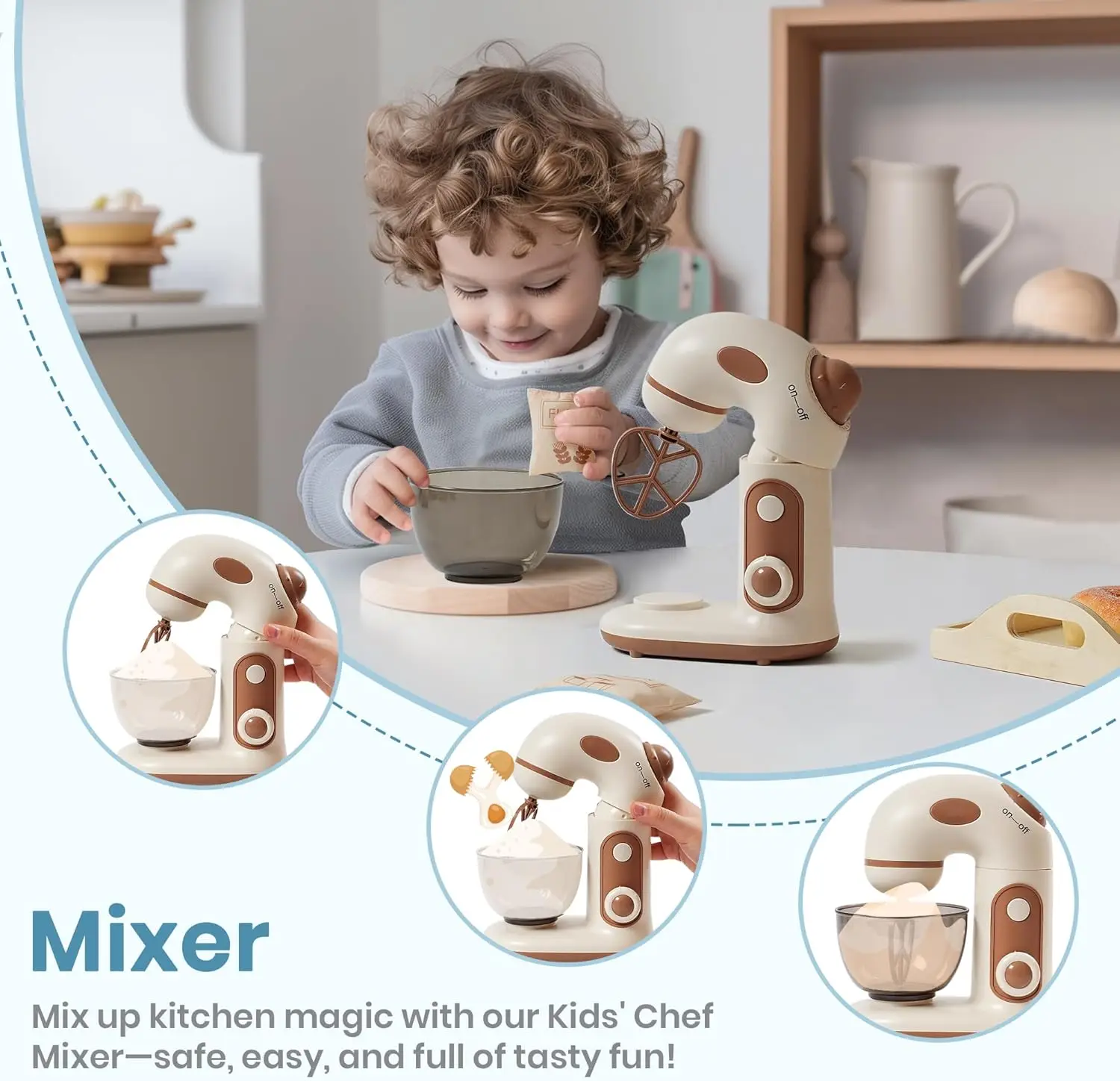
The best toys for pretend play are open-ended ones that can represent many things. Play kitchens, dollhouses, dress-up clothing, baby dolls, toy tool sets, and small world figures (animals, community helpers, vehicles) consistently produce rich imaginative play. Avoid toys that do only one thing or require a screen to operate — these limit rather than expand a child’s imagination.
Watch for these positive signs: growing vocabulary and more complex sentences, better emotional regulation, increased ability to cooperate with peers, and more creative problem-solving in everyday situations. Children who play pretend frequently tend to be more flexible thinkers, more empathetic, and more verbally expressive — and the benefits compound over time.
Yes — significantly. Pretend play gives children a safe way to rehearse, revisit, and reframe experiences that felt scary or overwhelming. A child anxious about starting school may play “school” many times to feel more in control. Similarly, a child who found a hospital visit frightening might replay it with stuffed animals to process their feelings. This is healthy and self-regulating behavior.
Pretend play may look like simple fun from the outside. In reality, it is doing some of the most important developmental work of childhood — simultaneously building language, creativity, empathy, executive function, social skills, and emotional intelligence. Furthermore, it does all of this in a way that children love without any coaxing required.
As a parent, caregiver, or educator, you don’t need to design elaborate play scenarios. Instead, simply provide the space, the time, and the right props — then step back and watch your child grow. The investment you make in pretend play today pays dividends in cognitive and social development for years to come.
At Everything Children’s Outlet, we’re passionate about equipping families with toys and playsets that spark imagination and support healthy development — from play kitchens and dollhouses to dress-up accessories and open-ended creative sets. Because every great adventure truly does begin with imagination. 🌟