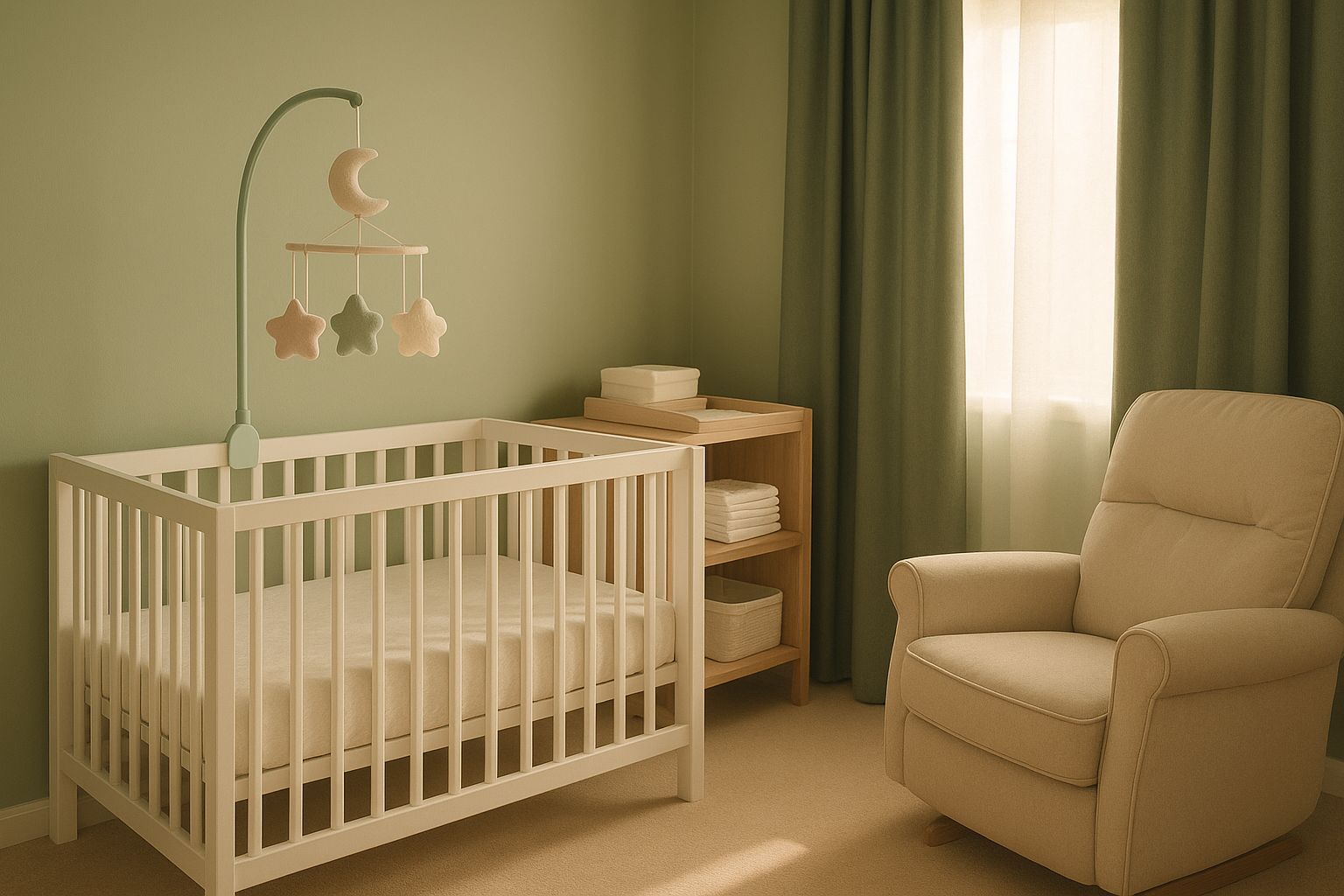
The right nursery products for newborns do far more than fill a room — they directly shape your baby’s safety, sleep quality, and daily comfort from the very first night home. According to the American Academy of Pediatrics (AAP), a properly prepared sleep environment is one of the single most effective ways to reduce the risk of sudden infant death syndrome (SIDS). Therefore, choosing the right products is not just a shopping task — it is one of the most important things you will do before your baby arrives.
This guide covers every category of essential nursery product — from safe sleep furniture and diapering stations to health monitoring tools, feeding setups, organization systems, and budget guidance. Whether you are building a nursery from scratch or filling in the gaps, you will find clear, practical answers here.
Nursery products for newborns are the furniture, bedding, care tools, and environmental items designed to support an infant’s safety and development from birth through the first year of life. These products fall into several overlapping categories: sleep, diapering, feeding, health monitoring, sensory comfort, and organization. Together, they form the foundation of a functional and nurturing nursery environment.
Specifically, a complete nursery typically includes a crib or bassinet, a firm mattress, fitted sheets, a changing station, a glider or rocker, a baby monitor, and soft goods like swaddle blankets and sleep sacks. Each item plays a distinct role. Furthermore, the layout and organization of these products affects how efficiently you can care for your baby — especially during middle-of-the-night routines.
It is also worth knowing what you can skip. Bumper pads, loose pillows, positioners, and decorative loose blankets inside the crib are not only unnecessary — they are actively unsafe. The AAP and the U.S. Consumer Product Safety Commission (CPSC) strongly advise against placing any of these items in a newborn’s sleep space.
Understanding what is essential versus what is optional helps you spend wisely and prioritize safety from the start. For a deeper walkthrough, see our Kids and Water Safety: Swim Lessons or Floaties?.
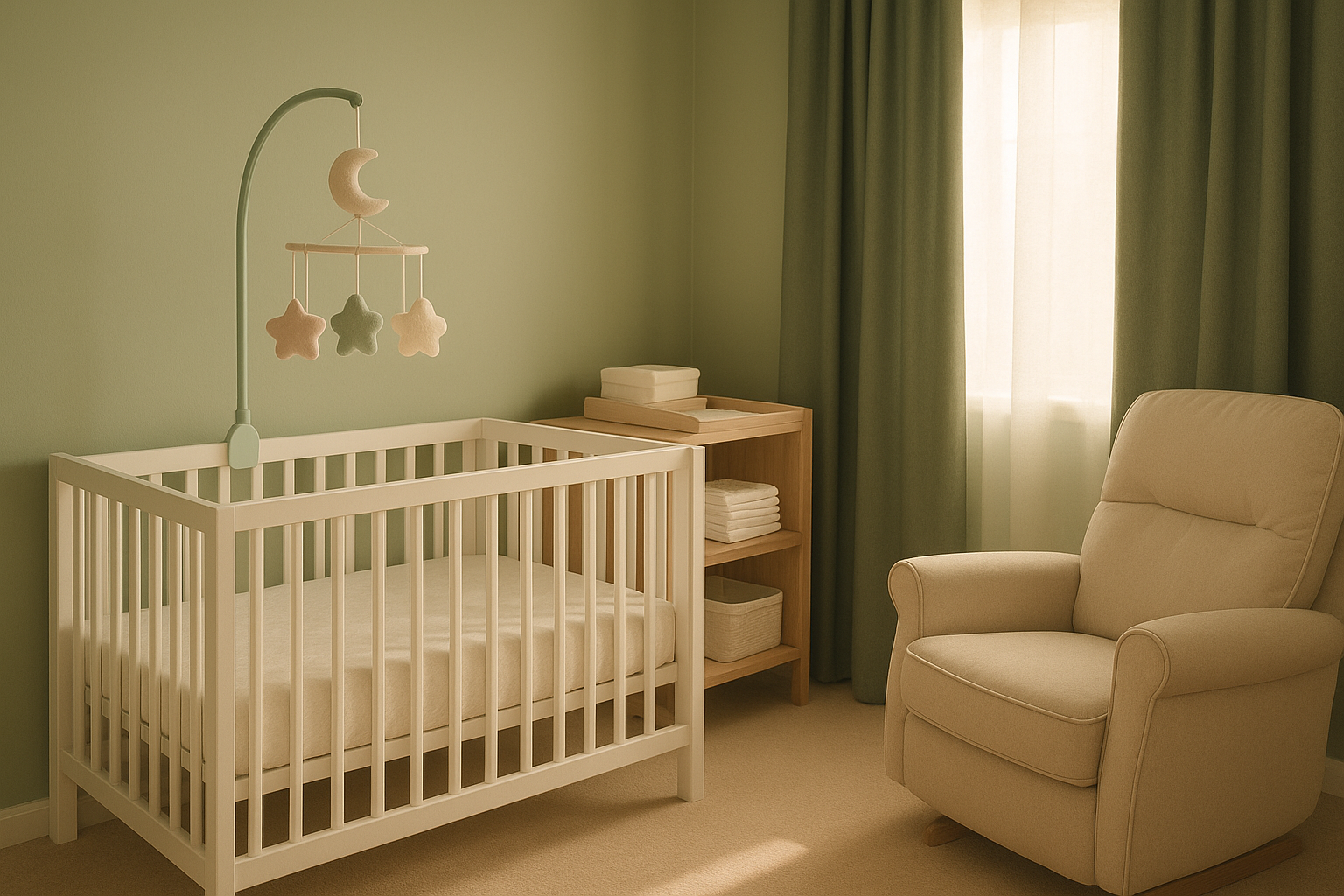
A thoughtfully arranged newborn nursery brings together the essential nursery products for newborns in one safe, welcoming space.
Safe sleep is, without question, the highest-priority category when setting up a newborn nursery. The CPSC reports that approximately 3,500 sleep-related infant deaths occur in the United States each year. Consequently, the products you choose for your baby’s sleep environment — and how you use them — carry enormous weight. For a deeper walkthrough, see our How to Choose Safe Toys for Toddlers: The Complete Parent’s Guide.
Every safe sleep setup should include the following core items:
Additionally, many pediatricians recommend room-sharing — not bed-sharing — for at least the first six months. A bassinet placed next to the parents’ bed makes nighttime feeding significantly easier before you transition your baby to a nursery crib.
A bassinet is compact, lightweight, and easy to place beside the bed. It works well for newborns up to approximately 4 to 6 months or until the baby can push up on hands and knees — whichever comes first. A full-size crib, in contrast, accommodates babies and toddlers up to around age 3. Many families buy both: the bassinet for those early weeks of room-sharing and the crib for the longer-term nursery setup.
If budget is a concern, a mini crib is a middle-ground option — smaller than a standard crib but longer-lasting than a bassinet. However, always confirm that compliant mattresses are readily available for the size you choose.
Two environmental products make a dramatic difference in newborn sleep quality. Blackout curtains block outside light, which helps establish healthy circadian rhythms — the body’s internal 24-hour clock — in your baby’s developing brain. Daytime naps and early bedtimes both become easier when the room is consistently dark.
Similarly, a white noise machine masks household sounds that can startle a sleeping infant. The AAP recommends keeping white noise below 50 decibels and placing the machine at least 7 feet from the crib. At that distance and volume, white noise supports longer, more restful sleep without any documented risk to infant hearing.
Newborns require approximately 8 to 10 diaper changes per day. That adds up to roughly 70 changes per week in the early weeks. Therefore, a well-organized, fully stocked changing station is not optional — it is central to your daily routine and your baby’s safety. You should never leave a baby unattended on a changing surface, so having everything within arm’s reach is a hard rule.
Stock your changing station with these essentials:
Both cloth and disposable diapers are widely used and each has clear advantages. Disposable diapers offer maximum convenience and are the most common choice for the newborn phase. Cloth diapers, in contrast, are more eco-friendly and economical over time but require a larger upfront investment and a washing routine. Many families use disposables initially and transition to cloth later. Whichever you choose, keep a sufficient stock on hand — running out at 2 a.m. is an experience best avoided.
Monitoring your newborn’s health at home gives parents real confidence and helps identify potential issues before they escalate. A few simple, affordable tools belong in every well-prepared nursery — and their value becomes clear the first time your baby feels warm at midnight.
One of the most practical health items is a reliable infant digital pacifier thermometer. It takes temperature gently and accurately — without the distress of a rectal thermometer — making nighttime checks much simpler for both parent and baby.
Additional health and monitoring essentials include:
Baby monitors come in three main types: audio-only, video, and smart monitors with app connectivity. Audio monitors are simple and affordable. Video monitors give you visual confirmation that your baby is safe, which most parents find invaluable. Smart monitors, furthermore, can track breathing movement, room temperature, and even send real-time data to your phone. Choose the level of monitoring that matches your comfort needs and budget.
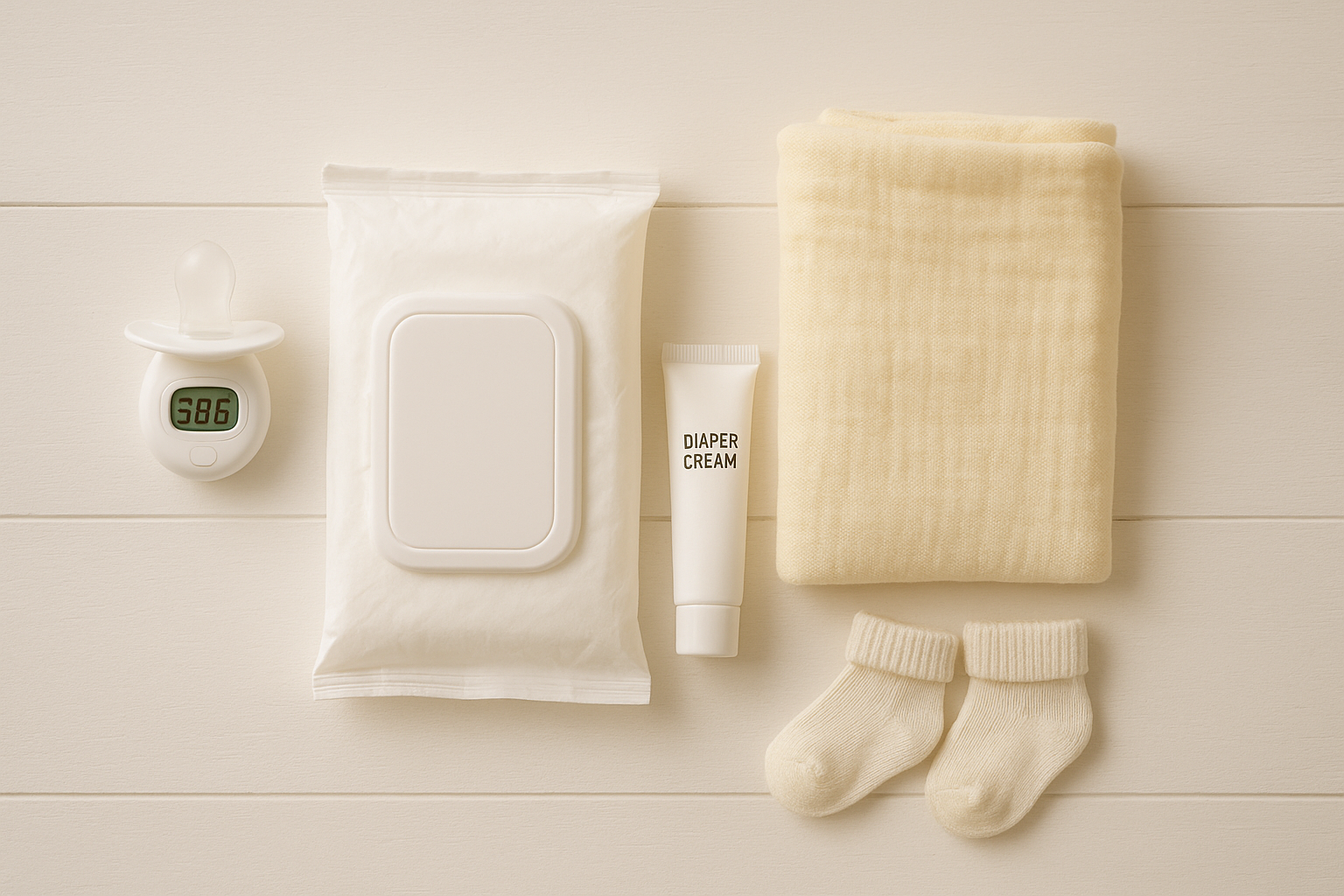
Everyday care items like a digital thermometer and soft swaddles are indispensable nursery products for newborns.
Whether you are breastfeeding, bottle-feeding, or a combination of both, a comfortable and well-stocked feeding area in the nursery makes a significant difference — especially during nighttime sessions when exhaustion is highest.
A padded glider or rocker with solid armrests is one of the most-used pieces of furniture in any nursery. You will spend hours in it — feeding, burping, soothing, and reading. Specifically, look for a model with a matching ottoman, smooth gliding motion, and easy-to-clean upholstery. Many parents consider this a worthy splurge if the budget allows.
In addition, a small side table or nursing caddy beside the glider keeps essentials — water, burp cloths, your phone, snacks — within reach without requiring you to stand up mid-feed. This simple setup makes late-night sessions noticeably less exhausting.
For bottle-feeding families, a bottle warmer in or near the nursery eliminates trips to the kitchen at 3 a.m. Furthermore, having a dedicated stash of burp cloths — at least six to eight — means you always have a clean one available during and after every feed. Muslin and terry cloth both work well; muslin dries faster while terry cloth absorbs more.
Breastfeeding parents may also want a nursing pillow nearby. A horseshoe-shaped pillow — like a Boppy — supports the baby at the right height during feeds, reducing strain on your back and arms. Nursing pads, a nipple cream, and a small cooler for pumped milk round out a complete breastfeeding station. For a deeper walkthrough, see our Is everythingchildrensoutlet.com a Legit Baby Store? A Complete Review.
Pacifiers are worth keeping in the nursery. Interestingly, research cited by the AAP’s HealthyChildren.org suggests that pacifier use at sleep time may reduce SIDS risk. Offer a pacifier at naps and bedtime, but do not force it if the baby is uninterested. Have multiple on hand because they frequently disappear at the least convenient moments.
An organized nursery reduces daily stress considerably. Specifically, having dedicated storage for clothing, diapers, linens, and accessories means you can locate what you need quickly — even when running on two hours of sleep. Poor organization forces unnecessary searching, which slows down care routines at exactly the wrong moments.
Consider these organization essentials:
For a comprehensive overview of what to buy before your baby arrives, the baby essentials list at Everything Children’s Outlet covers clothing, nursery products, and care items in one convenient reference. For a deeper walkthrough, see our What Nursery Products Do I Really Need for a Baby?.
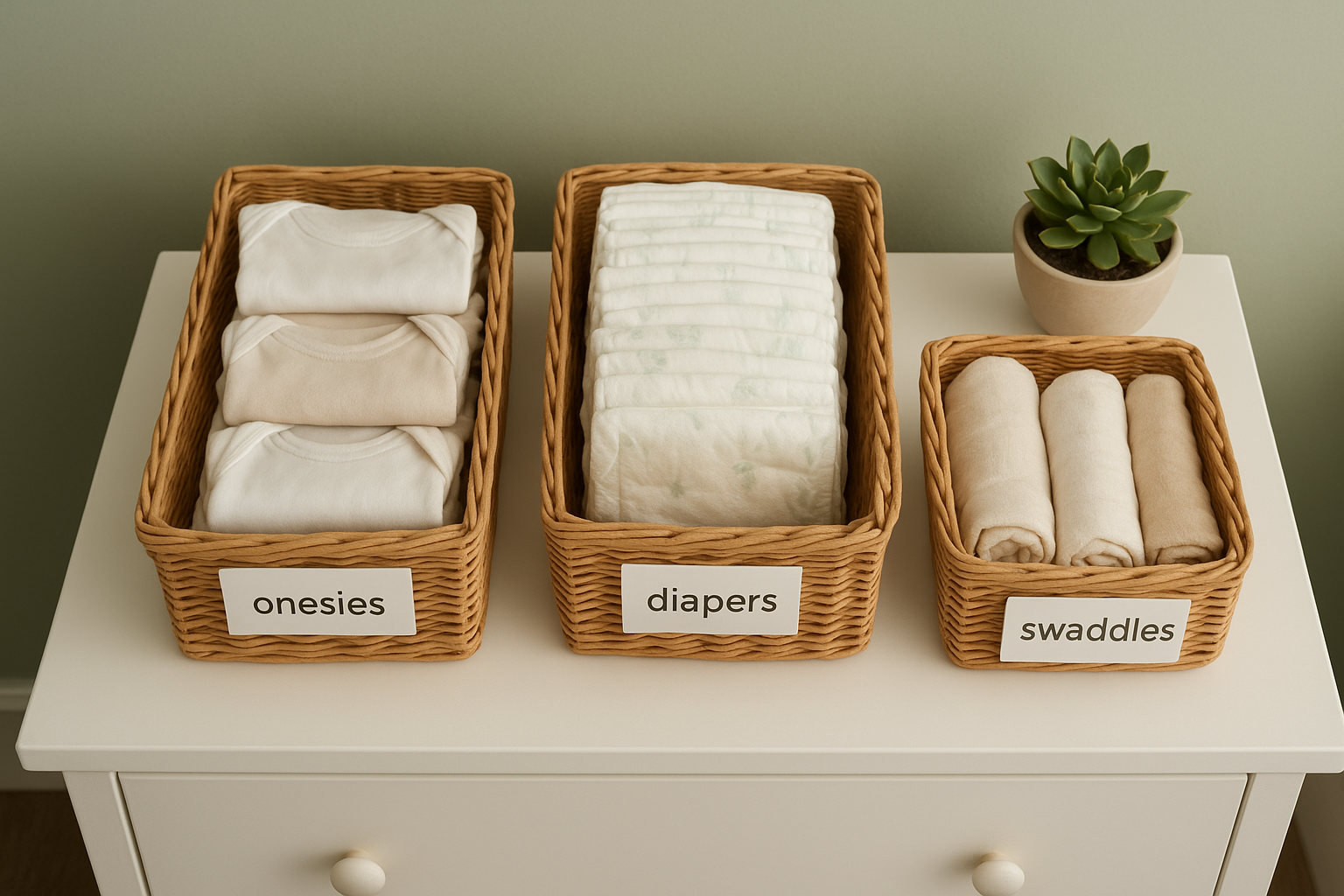
Smart nursery storage keeps all your newborn essentials accessible and the room clutter-free from day one.
Nursery safety extends well beyond the crib. In fact, many of the most serious nursery hazards involve furniture and environmental factors that parents overlook before the baby arrives. Addressing these early — before your newborn is mobile — means you will not need to scramble to childproof later.
Key nursery safety measures include:
Setting up a nursery can feel overwhelming, but breaking it into a clear sequence makes the process manageable. Furthermore, starting early — ideally between weeks 28 and 32 of pregnancy — gives you plenty of time to address unexpected issues before your due date. Most parents aim to complete the setup by week 36.
One of the most common questions expecting parents ask is how much a nursery actually costs. As a result, here is a practical breakdown by budget tier to help you plan with confidence. For a deeper walkthrough, see our How to Outfit a Newborn Nursery on a Budget: The Complete Guide.
A fully functional, safe nursery is achievable at this price point. Focus your spending on a CPSC-compliant crib ($150–$300), a firm mattress ($60–$120), a basic video monitor ($50–$100), and a dresser with changing topper ($150–$250). Fill the rest of the budget with bedding, a diaper pail, and soft goods.
At this tier, you can add a quality glider ($200–$500), a smart baby monitor ($150–$300), a bassinet for room-sharing ($100–$250), a white noise machine ($30–$80), blackout curtains ($50–$120), and a cool-mist humidifier ($40–$80). This range covers all categories comfortably.
Premium setups include high-end convertible cribs that grow with your child ($400–$1,000+), luxury gliders ($600–$1,200), smart monitoring systems, and coordinated nursery furniture collections. However, it is worth noting that many of the most important safety features are available at budget-friendly price points — cost does not have to be a barrier to a safe, well-equipped nursery.
For accessible, carefully curated nursery products for newborns at every price point, Everything Children’s Outlet offers a well-organized selection of baby essentials — clothing, nursery items, care products, and more — all in one convenient destination. To learn more about why families trust this retailer, visit the why families love shopping at Everything Children’s Outlet page.
While newborns do not need toys in the traditional sense, sensory stimulation is important from birth. In particular, high-contrast black-and-white patterns, soft mobiles above the crib, and gentle rattles engage a newborn’s developing visual and auditory systems. These simple items support early brain development without overwhelming a brand-new sensory system.
As your baby grows into the toddler stage, you can introduce more interactive sensory play. Products like sensory water play toys are excellent for supporting fine motor development and tactile exploration. Planning for these milestones now helps you build a nursery that truly grows with your child.
The HealthyChildren.org resource from the AAP also provides evidence-based guidance on age-appropriate toys, nursery safety, and infant developmental milestones — a highly practical supplement to any product checklist.
The most essential nursery products for newborns are a CPSC-compliant crib or bassinet, a firm flat mattress with a snug fit, fitted crib sheets, a changing table with pad, a baby monitor, and a white noise machine. Additionally, a glider, swaddle blankets, a reliable infant thermometer, and a diaper pail are highly recommended for daily newborn care.
Start with a firm, flat mattress that fits snugly in the crib with no gaps. Keep the sleep area completely free of pillows, loose blankets, positioners, and bumper pads — as directed by the AAP. Anchor all tall furniture to the wall, install outlet covers, eliminate corded window blinds, and use low-VOC paint. Check secondhand items against the CPSC recall database before use.
A safe, functional nursery can be set up for $500–$900 on a budget. A mid-range nursery with a glider, smart monitor, and bassinet typically runs $900–$2,000. Premium nurseries with high-end convertible furniture and smart monitoring systems range from $2,000 to $4,000 or more. Importantly, cost does not determine safety — all essential safety features are available at budget-friendly price points.
Most parents begin between weeks 28 and 32 of pregnancy. Starting early gives you time to research products, wait for deliveries, assemble furniture, paint and ventilate the room, and wash all fabrics before your due date. Aim to complete the nursery setup by week 36. For a deeper walkthrough, see our Child Safety Products: A Complete Guide for Parents.
A standard full-size crib meeting current CPSC standards is the safest option. Slats must be no more than 2-3/8 inches apart. The crib must have a firm, flat mattress with a snug fit on all sides. Drop-side cribs are banned in the U.S. and should never be used. Convertible cribs that grow from crib to toddler bed offer excellent long-term value. For a deeper walkthrough, see our 3-Pieces Bedroom Sets, Harper & Bright Designs Queen Size LED Velvet Platform Be.
Yes — a baby monitor is one of the most recommended nursery products for newborns. It allows you to hear or see your baby from another room, providing peace of mind during naps and overnight. Video monitors with two-way audio are particularly useful because they let you soothe your baby remotely before entering the room.
White noise machines are safe when used correctly. The AAP recommends keeping volume below 50 decibels and placing the machine at least 7 feet from the crib. At that distance and volume, white noise effectively masks household sounds and supports longer sleep without any documented risk to infant hearing.
The core pieces are a crib or bassinet, a changing table or dresser with changing topper, and a comfortable glider or rocker. A wardrobe or closet organizer is very helpful. A bookshelf for board books can be added as your baby grows. Everything else — decorative items, rugs, mobiles — is secondary to this functional foundation.
Pediatric experts typically recommend at least three to four fitted crib sheets. Newborns are prone to diaper leaks and spit-up, meaning you may need to change the sheet multiple times in one night. Soft, breathable organic cotton sheets sized to your specific mattress are the preferred choice.
The ideal nursery temperature for a newborn is between 68 and 72 degrees Fahrenheit (20–22°C). This range reduces the risk of overheating, which is a known SIDS risk factor. A room thermometer and hygrometer combination device is an affordable, reliable way to monitor both temperature and humidity continuously.
A bassinet is compact and portable, designed for newborns up to approximately 4 to 6 months. A crib is a larger, longer-term sleeping solution that accommodates babies and toddlers up to around age 3. Many families use both — a bassinet beside the bed for room-sharing in the early weeks, then transition to a full crib in the nursery.
Blackout curtains are not strictly required but are highly beneficial. They block outside light, which helps regulate your baby’s developing circadian rhythm and supports both daytime naps and consistent early bedtimes. Many parents report that blackout curtains are one of the most impactful single purchases for improving newborn sleep.
Essential diapering supplies include a waterproof changing pad and 2–3 covers, newborn and size 1 diapers, fragrance-free hypoallergenic wipes, zinc oxide diaper rash cream, and a sealed diaper pail with odor-control liners. Keep all of these within arm’s reach — never leave a baby unattended on a changing surface.
A cool-mist humidifier is beneficial in dry climates or during winter months. It maintains comfortable humidity levels (40–60%), helps ease nasal congestion, and prevents skin dryness. Always use distilled or demineralized water and clean the humidifier every 1–3 days to prevent mold and bacteria growth.
Look for solid armrests, smooth and quiet gliding motion, a cushioned seat, and easy-to-clean upholstery. A matching ottoman adds comfort for longer feeding sessions. Test the chair’s motion before purchasing to ensure it is smooth and silent — a squeaky glider is particularly frustrating during nighttime routines.
Affordable nursery products for newborns are available at everythingchildrensoutlet.com, which offers a curated selection of baby essentials including clothing, nursery items, and care products. Shopping online lets parents compare options, read reviews, and have items delivered — saving time and reducing the stress of shopping while preparing for a baby. For a deeper walkthrough, see our Is Everythingchildrensoutlet.com Good for Baby Gear?.
Selecting the right nursery products for newborns ultimately comes down to three priorities: safety, function, and comfort — in that order. As we have covered throughout this guide, the foundation begins with a compliant safe sleep setup and extends through organized diapering and feeding stations, reliable health monitoring tools, smart storage solutions, and environmental safety measures. Each category plays a meaningful role in your baby’s daily well-being and your own peace of mind as a new parent.
By starting early, shopping with a clear checklist, and prioritizing safety above aesthetics, you can build a nursery that serves your family beautifully through every milestone of your baby’s first year and beyond. The right nursery products for newborns are an investment not just in your baby’s environment — but in the confidence and calm that every new parent deserves.