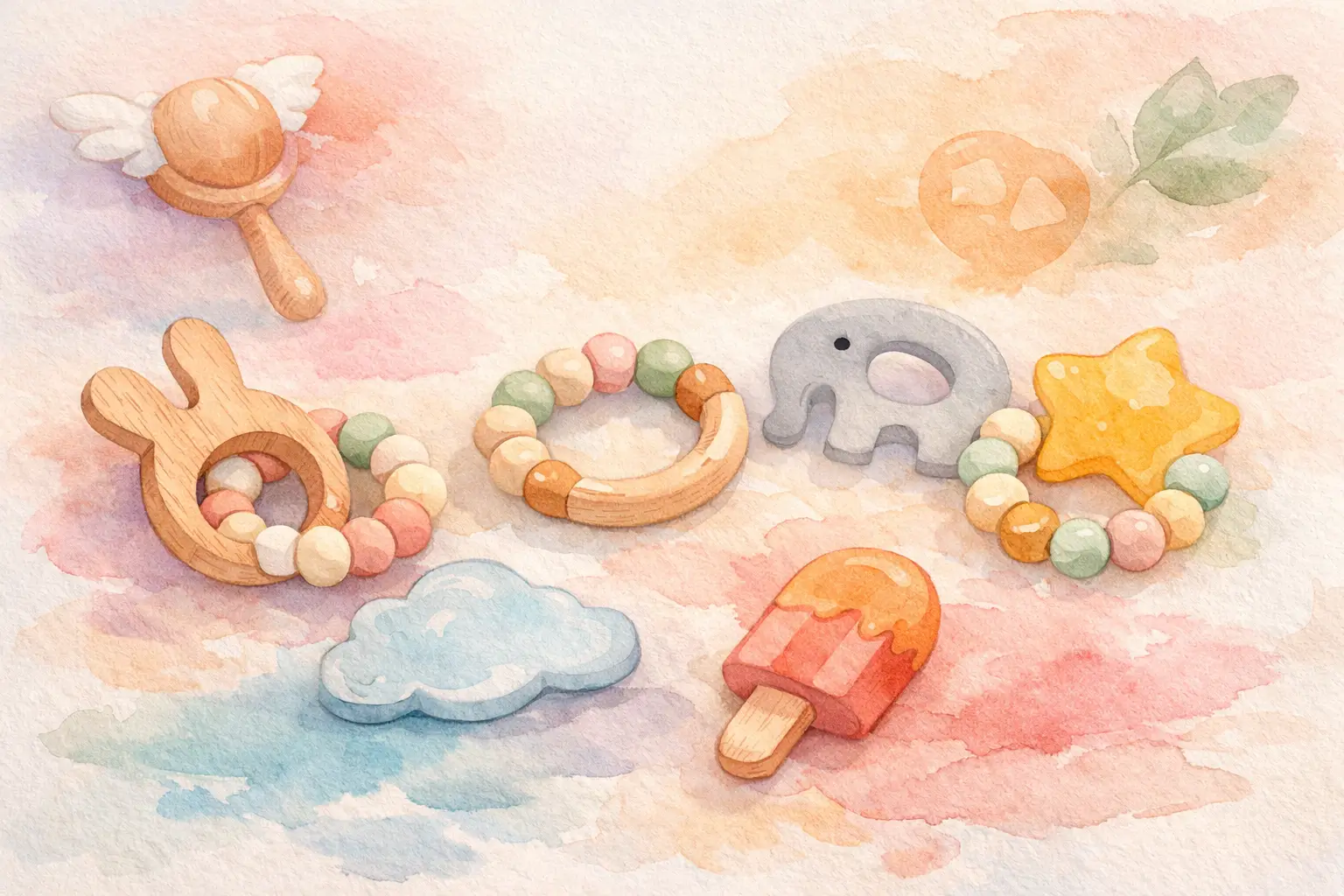
A teething baby can turn a calm afternoon into a full-time search for something safe to chew. The right toy can offer welcome comfort, but baby teething toy safety should come before color, price, or a cute character design. Babies explore with their mouths, and a toy that is too small, damaged, difficult to clean, or made for an older child can create risks that are easy to miss during a busy day.
The good news is that choosing wisely does not have to be complicated. A few practical checks can help parents and gift buyers find soothing toys that are comfortable for little hands, gentle on tender gums, and ready for everyday use.
Always begin with the manufacturer’s recommended age range. Teething toys are designed around developmental stages, including how strongly a baby can bite, grip, pull, and move objects toward their mouth. A toy intended for a toddler may have parts, shapes, or features that are not appropriate for a younger baby.
Size matters just as much. A teether should be large enough that it cannot fit fully into a baby’s mouth, yet light enough for small hands to hold without frustration. Look closely at rings, handles, and attached pieces. If a piece could loosen, bend apart, or detach after repeated chewing, it is not a good choice for a baby.
Avoid giving a baby household objects as substitutes for teethers, even if they seem harmless. Keys, jewelry, pen caps, small plastic toys, and adult toothbrushes can have sharp edges, breakable parts, coatings, or choking hazards. Purpose-made baby products are designed with chewing and mouthing in mind.
Parents often see terms such as silicone, natural rubber, plastic, wood, and BPA-free. These labels can be useful, but they do not replace checking the full product information and using the toy as directed.
Food-grade silicone is a popular option because it is soft, durable, and usually easy to wash. Natural rubber can feel pleasantly flexible for babies who prefer a softer chew, though families should keep possible latex sensitivity in mind. Solid wooden teethers can be a simple choice when they have a smooth finish and are specifically made for babies, but they need extra attention to cleaning and moisture.
When choosing any material, look for clear safety information from the maker. A reputable teething toy should state its intended age, care instructions, and material details. Be cautious about products with strong chemical odors, sticky surfaces, peeling paint, cracks, or vague descriptions. If something seems off when it arrives, trust that instinct and do not offer it to your child.
It also helps to skip teethers that contain liquid or gel unless you can confidently follow the manufacturer’s instructions. A puncture can create a mess and may make the product unsafe to use. Solid, one-piece designs are often easier for parents to inspect and clean.
A safe teething toy should feel thoughtfully made from top to bottom. Run your fingers over its surface before giving it to your baby. There should be no rough seams, sharp edges, splinters, loose decorations, or narrow openings where tiny fingers could get caught.
Textured bumps and ridges can be helpful for sore gums, but they should be soft and rounded. Some babies enjoy a variety of textures, while others prefer a smooth ring or a flexible shape they can easily reposition. There is no single best style for every child. The safest choice is one that matches your baby’s age, grip, and chewing habits.
Teething necklaces, bracelets, and toys with long cords deserve special caution. Items worn by an adult are not the same as a toy made for independent baby use. Never leave a baby alone with a teething necklace, clip, cord, or strap, and do not place anything around a baby’s neck for chewing. Strangulation and entanglement risks are not worth the convenience.
Teething toys spend a lot of time on the floor, in the diaper bag, and in a baby’s mouth. Regular cleaning is part of everyday safety, especially during cold and flu season or when toys are shared between siblings.
Follow the product’s care instructions first. Many silicone teethers can be washed with warm, soapy water and thoroughly rinsed. Some are dishwasher-safe, but do not assume that every silicone or plastic product can go in the dishwasher. High heat can warp certain materials or affect parts that are glued together.
Wood requires a gentler approach. Do not soak a wooden teether or leave it sitting in water, as moisture can cause swelling, cracking, or a rough surface. Wipe it clean according to the maker’s directions and let it dry fully before storing it.
A clean storage spot makes a difference, too. Rather than tossing a teether loose into a purse or stroller basket, keep it in a clean pouch or container. If it falls on a public floor, wash it before returning it to your baby. That small pause can prevent a lot of unnecessary germ sharing.
Cool teethers can feel soothing on swollen gums, but frozen teethers can become too hard for a baby’s mouth. Extreme cold may be uncomfortable and can irritate sensitive gums. Refrigerating a teether is usually a gentler option when the manufacturer says it is suitable for chilling.
Never freeze a teething toy with liquid inside unless the instructions specifically say it is safe to do so. Also avoid homemade frozen items that could splinter, crack, leak, or become a choking hazard. A clean, chilled teether used while an adult is nearby is a simple and dependable comfort option.
Teething toys are not buy-once, use-forever items. Biting, pulling, dropping, heat, and frequent washing all cause wear over time. Give each teether a quick inspection before use, especially if your baby is a determined chewer.
Replace the toy if you notice cracking, tearing, punctures, discoloration that does not wash away, sticky residue, loose pieces, or changes in texture. A worn teether may no longer be safe, even if it is a favorite. Keeping two or three clean options on hand can make it easier to retire one without disrupting your baby’s routine.
If a product is recalled, stop using it right away. Registering a product when that option is available can help families receive recall notices. For gift buyers, including the packaging and care information with the gift gives parents the details they need to use it safely.
Even a well-designed teething toy needs adult supervision. Babies can turn, roll, grab, and chew in unexpected ways, particularly as they become more mobile. Stay close while your baby uses a teether, and remove it before naps, bedtime, and car-seat sleep.
A teether should comfort your child, not replace attention when they are unusually upset. Teething can bring drooling, gum tenderness, fussiness, and a desire to chew. But a fever, diarrhea, rash, refusal to eat or drink, trouble breathing, or persistent crying may point to something other than teething. When symptoms feel concerning, contact your child’s pediatrician.
The best teething toy is not necessarily the fanciest one. It is a clean, age-appropriate, well-made option that your baby can hold comfortably while you are nearby. Choosing with care gives little ones a safer way to soothe sore gums and gives parents one more reassuring tool for the teething days ahead.
At Everything Childrens Outlet, families can look for cheerful, practical baby essentials that support everyday care without making shopping feel overwhelming. A carefully chosen teether may be small, but it can bring a very welcome moment of calm to a growing family. For a deeper walkthrough, see our List for Baby Essentials That Makes Sense.