A toddler with a wooden spoon, a cardboard box, and five quiet minutes can turn your living room into a bakery, a bus station, or a dinosaur cave. That is the magic behind creative play toys for toddlers – they do not need to do everything for your child. The best ones simply give little hands and growing minds room to build, pretend, sort, stack, and explore.
For parents, that matters because toddler play is never just play. It is how children practice problem-solving, language, coordination, and confidence. The right toy can hold attention, invite repeat use, and grow with your child instead of ending up forgotten in a toy bin by next week.
Toddlers learn best through active, hands-on experiences. A toy that lights up and performs at the push of a button might entertain for a moment, but creative play usually lasts longer when the child is the one making something happen. That could mean fitting chunky puzzle pieces together, pretending to cook dinner, building a tower, or making up a story with animal figures.
This kind of open-ended play supports more than imagination. It also helps toddlers work on fine motor skills, early planning, sensory exploration, and emotional expression. When a child stacks blocks and watches them tumble, they are learning cause and effect. When they feed a doll or tuck in a stuffed animal, they are trying out caring routines they see every day.
There is a practical side for families too. Creative toys often offer better long-term value because they can be used in different ways over time. A simple set of nesting cups might start as a bath toy, then become a stacking game, then turn into pretend kitchen supplies. That flexibility matters when you want toys that earn their spot in your home.
Parents can feel a lot of pressure to pick the perfect developmental toy, but the truth is simpler. Good toddler toys should match your child’s stage, feel safe and sturdy, and leave room for imagination. You are not trying to build a preschool classroom at home. You are choosing a few dependable play options that fit real family life.
Start with age-appropriateness. Toddlers need pieces large enough to handle safely, materials that can stand up to drops and chewing, and activities they can understand without frustration. A toy that is too advanced may look impressive, but if your child cannot use it successfully, it will not hold interest for long.
It also helps to think about your child’s natural play style. Some toddlers love movement and hands-on building. Others lean toward pretend play, sensory play, or sorting and matching. You do not need one of everything, but a small mix can keep playtime fresh and useful.
Space and cleanup matter too. Large toy kitchens and ride-ons can be wonderful, but they are not the only way to support creativity. Compact options like blocks, shape sorters, art tools, pretend food, and play sets can deliver just as much value in smaller homes or busy households.
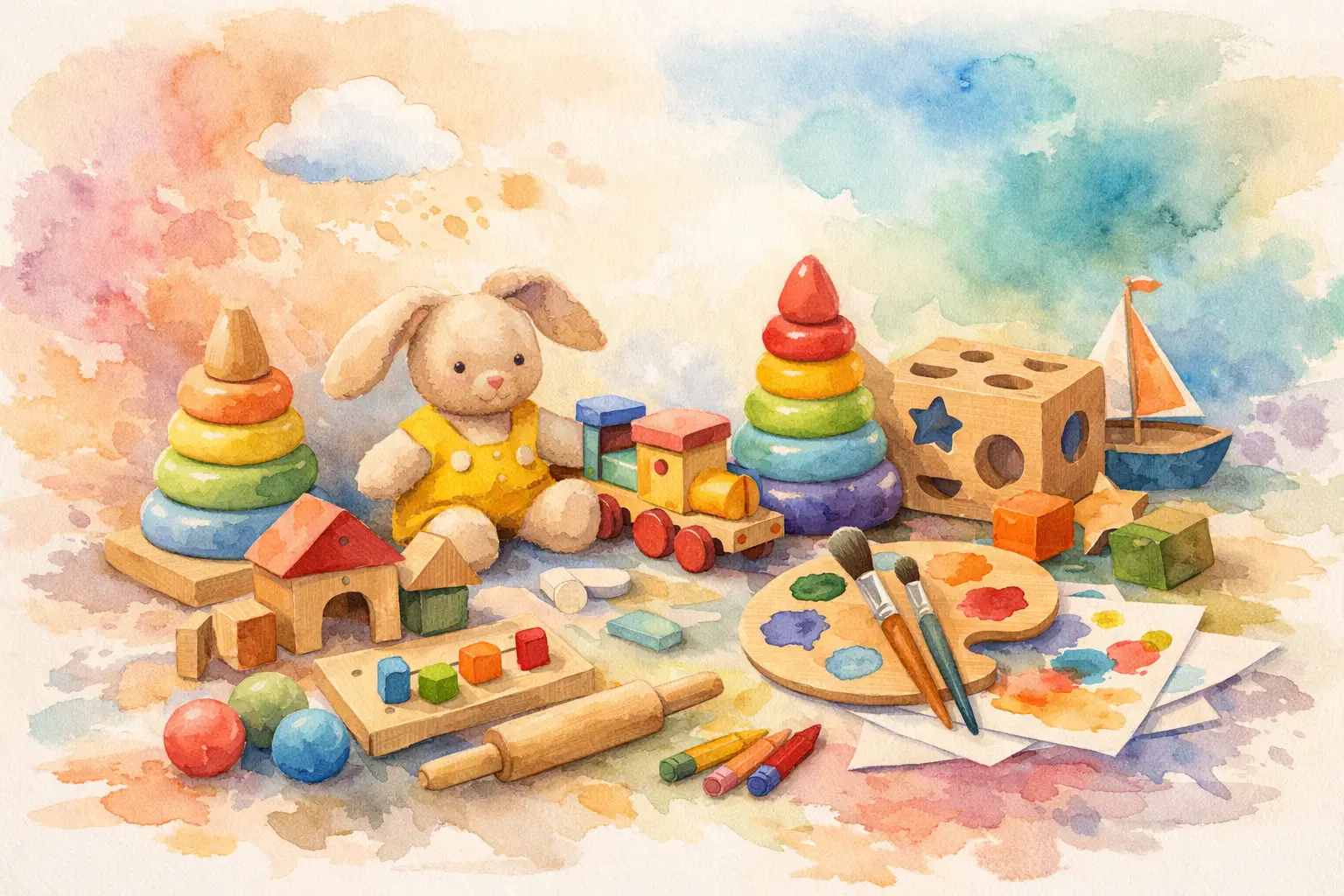
Blocks are one of the most reliable picks for a reason. They are simple, durable, and full of possibilities. Toddlers can stack them, line them up, knock them down, and eventually use them in pretend scenes. Wooden blocks, soft blocks, and large interlocking blocks all work well depending on your child’s age and preferences.
Pretend play toys are another strong choice. Play kitchens, toy food, doctor kits, tool benches, dolls, and stuffed animals help toddlers copy the world around them. That kind of role play builds vocabulary and social understanding while giving kids a fun outlet for everyday feelings and routines.
Art supplies designed for little ones can be excellent for creativity, as long as they are washable and easy to use. Thick crayons, dot markers, coloring pads, and toddler-safe painting tools let children experiment with color and motion without needing perfect control. The point is not the finished art. It is the process of making marks, choosing colors, and trying something new.
Puzzles and shape toys support a different kind of creativity. They may look more structured, but they still invite problem-solving and trial and error. Chunky puzzles, sorting sets, nesting toys, and stacking rings help toddlers think spatially while keeping little hands busy.
Sensory toys can also be a smart addition, especially for children who enjoy touching, pouring, squeezing, or scooping. Play sand, water tables, textured balls, and sensory bins can offer rich learning moments. The trade-off is mess. For many families, that means saving these toys for outdoor play or using them in short, supervised sessions.
It is easy to assume more toys means more engagement, but toddlers often play better with fewer choices. A crowded toy shelf can overwhelm young children and make it harder for them to settle into meaningful play. When everything is available at once, nothing feels especially interesting.
A smaller rotation usually works better. Keep a handful of creative options out, then swap in different toys every week or two. This keeps familiar items feeling new and helps you notice what your child actually returns to. It is also easier on your budget because you can focus on versatile toys instead of constantly chasing the next trend.
This is where thoughtful shopping makes a real difference. Parents do not need a huge collection to support early development. A curated mix of durable, age-appropriate toys often delivers more play value than a room full of noisy plastic gadgets.
For toddler products, safety is never a bonus feature. It is the baseline. Look for toys made with child-friendly materials, smooth edges, and sturdy construction. Small detachable parts, weak seams, or brittle plastic can turn a good idea into a frustrating or unsafe purchase.
Durability matters for another reason too. Toddlers play hard. Toys get dropped, dragged, stepped on, and occasionally tested in ways no product designer could fully predict. A well-made toy can handle everyday use and often lasts long enough to pass down to younger siblings.
Value is about more than price alone. An affordable toy that gets used every day is a better buy than a more expensive item that loses appeal in one afternoon. Parents and gift buyers usually get the best results by looking for toys with staying power – items that can support different kinds of play as a child grows.
The best toy in the world will not help much if it creates stress for the grown-ups. Ease of use counts. Toys that are simple to pull out, easy to wipe clean, and quick to put away tend to get used more often. That sounds small, but in a busy household, convenience can be the difference between regular play and toys that stay on a shelf.
It also helps to create simple invitations to play. Put a few blocks in a basket, set toy animals near a small bin, or place crayons and paper at the table. Toddlers respond well to visible, low-pressure setups. You do not need elaborate activities. A little accessibility goes a long way.
For gift buyers, this is worth remembering too. Parents usually appreciate toys that are fun for the child and practical for the home. Safe materials, manageable size, and everyday usefulness are often more welcome than oversized novelty items.
At Everything Childrens Outlet, that balance between joyful play and practical family needs is part of what makes shopping easier. Parents are not just looking for cute toys. They are looking for dependable choices that support learning, fit a budget, and make day-to-day life a little smoother.
Many of the most effective creative toys do not look flashy. They are the stacking cups, pretend dishes, building blocks, washable art tools, and animal figures that invite a child to do the interesting part. That is what makes them last. They leave room for the toddler to lead.
If you are shopping for creative play toys for toddlers, trust the options that encourage action, imagination, and repeat play. A toy does not need dozens of features to be a great one. Sometimes the best choice is the one that quietly gives your child space to create something all on their own.
A good toddler toy should make life feel lighter, not louder – and when it sparks curiosity, laughter, and one more round of play, you will know you picked well.