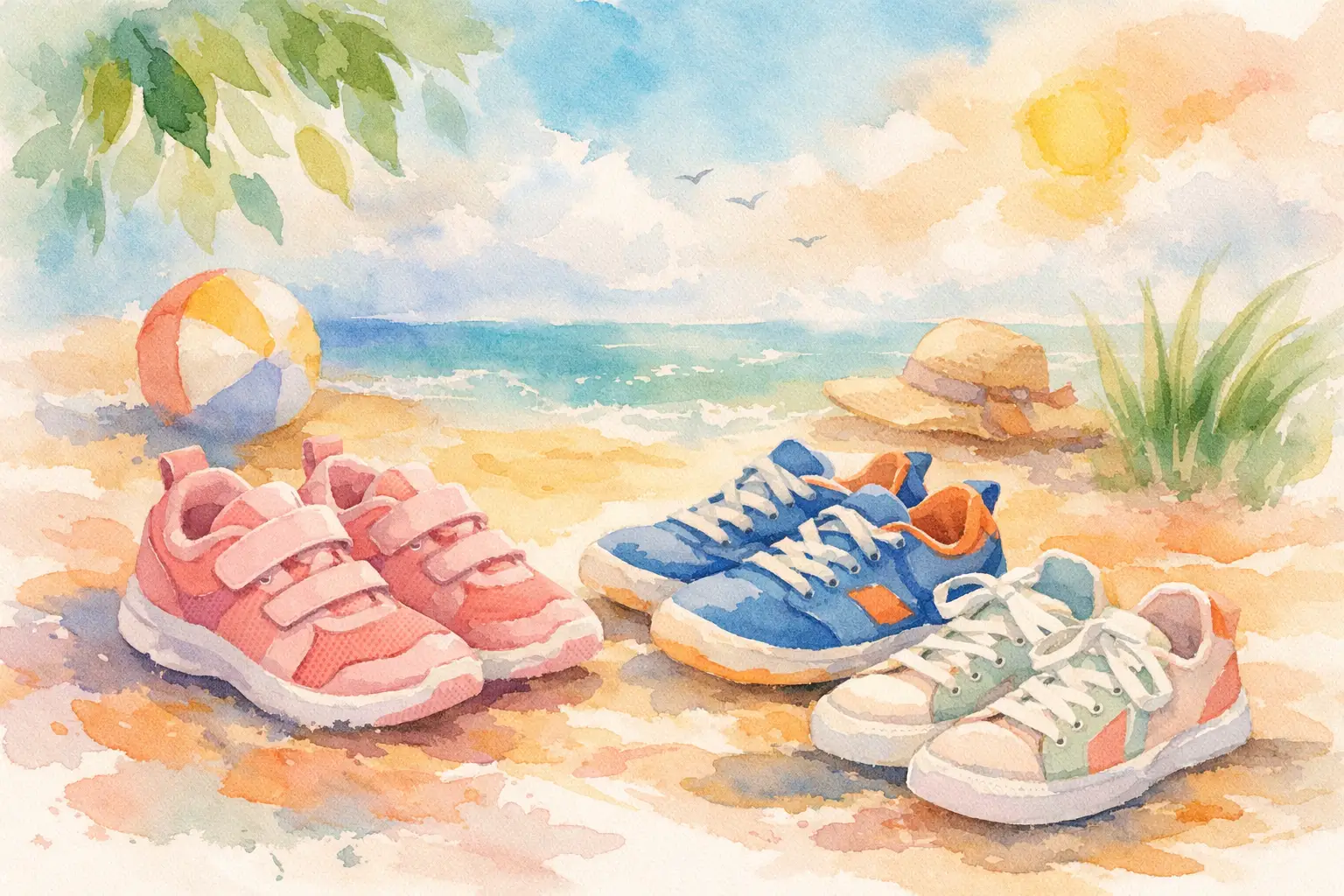
One hot playground afternoon can tell you everything you need to know about a kid’s shoes. If the sneakers are stiff, heavy, or sweaty by lunchtime, they usually stay by the door the next day. The best kids sneakers for summer need to do more than look cute – they have to keep up with running, climbing, camp days, park trips, and all the quick outfit changes that come with warm-weather routines.
For parents, that usually means finding the balance between comfort, durability, breathability, and price. A lightweight shoe may feel great in the store but wear down fast on pavement. A sturdier pair may last longer but feel too warm for all-day play. Summer footwear works best when it matches how your child actually moves through the day, not just how the shoe looks on the shelf.
Summer puts different demands on a child’s shoes than cooler months do. Feet get warmer, kids spend more time outside, and sneakers are more likely to handle everything from splash pad sidewalks to dusty playground mulch. That means airflow matters more, drying time matters more, and even the weight of the shoe matters more.
A good summer sneaker usually feels flexible and light without becoming flimsy. Materials should help release heat instead of trapping it. Mesh panels, soft linings, and lighter uppers can make a big difference, especially for kids who are active from morning to evening. At the same time, the sole still needs enough grip and structure to handle quick direction changes, bike rides, and the occasional sprint across a slick surface.
This is also the season when kids are less patient with uncomfortable shoes. In winter, thick socks can hide a few fit issues. In summer, a hot spot or rubbing heel gets noticed fast. That is why comfort is not an extra feature here – it is the starting point.
The pair that gets worn the most is usually the one that feels easiest. Kids tend to reach for shoes they can move in, put on without a struggle, and wear without overheating. For parents, the most useful shopping mindset is simple: look for a shoe that solves everyday problems before it tries to make a style statement.
If you only prioritize one feature, make it breathability. Summer sneakers should allow air to move through the upper so feet do not stay damp and overheated. Mesh is a popular choice for a reason. It is light, flexible, and better at ventilation than many thicker synthetic materials.
That said, fully open mesh can wear out faster for rough players, especially around the toe. If your child drags their feet on scooters or kneels a lot outdoors, look for breathable shoes with reinforced toe caps or sturdier overlays. The best option often sits in the middle – airy enough for hot weather, strong enough for active play.
A summer sneaker should stay on well without squeezing the foot. Kids’ feet can swell a little in the heat, so a shoe that feels just right in a cool store can feel snug after an hour outside. You want a little room at the toe, a heel that does not slip, and enough width that the foot is not pinched across the front.
Closures matter here too. Hook-and-loop straps are great for younger kids and busy mornings. Elastic laces with a strap can offer a quick, secure fit for school-age kids. Traditional laces may give the most adjustable fit, but they are only practical if your child can manage them or does not mind waiting for help.
It is easy to assume the lightest shoe is always the best summer choice. Sometimes that is true, especially for toddlers and preschoolers who do best in flexible footwear. But older kids who run hard, jump often, or spend long days on their feet may need more underfoot support than a super-thin sneaker provides.
A good summer sole should bend at the front of the foot, not fold in half through the middle. It should feel cushioned enough for concrete and playground surfaces but not so thick that the shoe becomes clunky. If your child is unusually active or wears sneakers all day at camp, a little extra support can be worth the trade-off in weight.
Some shoe details seem minor when you first shop, then become surprisingly important once real life takes over. Easy-on design is one of them. A wide opening, pull tab, or simple closure can save time every single day.
Washability is another big one. Summer shoes collect dirt fast, and kids are not known for avoiding puddles just because they are wearing sneakers. Materials that wipe clean or hold up well to gentle washing can make a pair last longer and look better between outings.
Grip matters more than many parents expect. Summer means smooth indoor floors after pool days, sidewalks warmed by the sun, and playground equipment that can get dusty or slick. A sole with reliable traction helps reduce slips, especially for younger children who move fast and do not always watch where they are going.
Color is worth thinking about too, but maybe not in the way ads suggest. White sneakers look fresh, but they show everything. Darker colors or mixed-tone designs often hide the wear that comes with daily use. If your child wants a bright, playful style and you want something practical, a colorful pair with darker accents can be the happy middle ground.
Not every child needs the same kind of summer sneaker. A toddler going from stroller rides to short playground sessions has different needs than an elementary schooler heading to camp five days a week. The right choice depends on where the shoe will be worn most.
For everyday errands, park trips, and casual play, a breathable low-top sneaker usually covers the basics well. It is easy to pair with shorts, leggings, or summer dresses, and it works for a wide range of activities.
For camp or all-day outdoor wear, durability starts to matter more. Look for stronger soles, toe protection, and linings that can handle repeated use without feeling rough. If the day includes both organized play and free play, the sneaker needs to move comfortably across different settings.
For younger kids who are still gaining confidence on their feet, flexibility and a secure fit are often the priority. Shoes that are too bulky can change the way they walk. A lighter, more natural-feeling sneaker can support movement without getting in the way.
For gift buyers, the safest choice is usually something simple, versatile, and adjustable. Summer shoes get used often, so a classic sneaker with easy closure and soft materials tends to be a welcome option for both kids and parents.
Some families can get through summer with one dependable pair of sneakers. That works best when the shoes are breathable, easy to clean, and suited to your child’s main activities. If your child rotates between sandals and sneakers, one solid pair may be all you need. For a deeper walkthrough, see our Breathable Toddler Shoes That Keep Up.
But there are times when a backup pair is practical, not excessive. If your child is in camp, spends long hours outdoors, or tends to soak shoes near water play, having a second pair can keep the week running smoothly. It also helps extend the life of each pair, since shoes have time to air out fully between wears.
This is especially true for kids who are hard on footwear. A second pair does not have to be fancy. It just needs to be comfortable enough that getting dressed in the morning stays easy.
Parents do not need the most expensive sneaker to get a good summer shoe. What matters more is choosing features your child will actually benefit from. Breathable construction, secure fit, traction, and everyday comfort will usually matter more than trend-driven details. For a deeper walkthrough, see our 12 Educational Toys Ideas Parents Will Use.
It also helps to think in terms of value, not just price. A slightly better-made pair that lasts through vacations, playground days, and back-to-school transition can be the better buy than a cheaper shoe that wears out halfway through the season. At the same time, if your child is in a fast growth stage, it may make sense to prioritize comfort and practicality over premium extras.
That is where a family-focused store with a wide, curated selection can make shopping easier. Everything Childrens Outlet is built for that kind of real-life decision making, with styles that support busy kids and budget-aware households without losing sight of comfort, safety, and everyday wear.
Sometimes the wrong pair gives itself away quickly. If your child keeps taking the shoes off, complains that their feet feel hot, or shows red marks around the heel or toes, it is worth reassessing the fit. The same goes for tripping more often, refusing to wear the sneakers, or showing unusual wear patterns after only a short time.
Kids do not always explain discomfort clearly. They may just call the shoes bad or say they do not like them. In summer, that often points back to heat, rubbing, stiffness, or a closure that never feels quite secure.
The right sneaker should feel easy enough that it fades into the background. When that happens, kids can focus on the fun part of summer – and you can feel better knowing their shoes are ready for the next busy day.