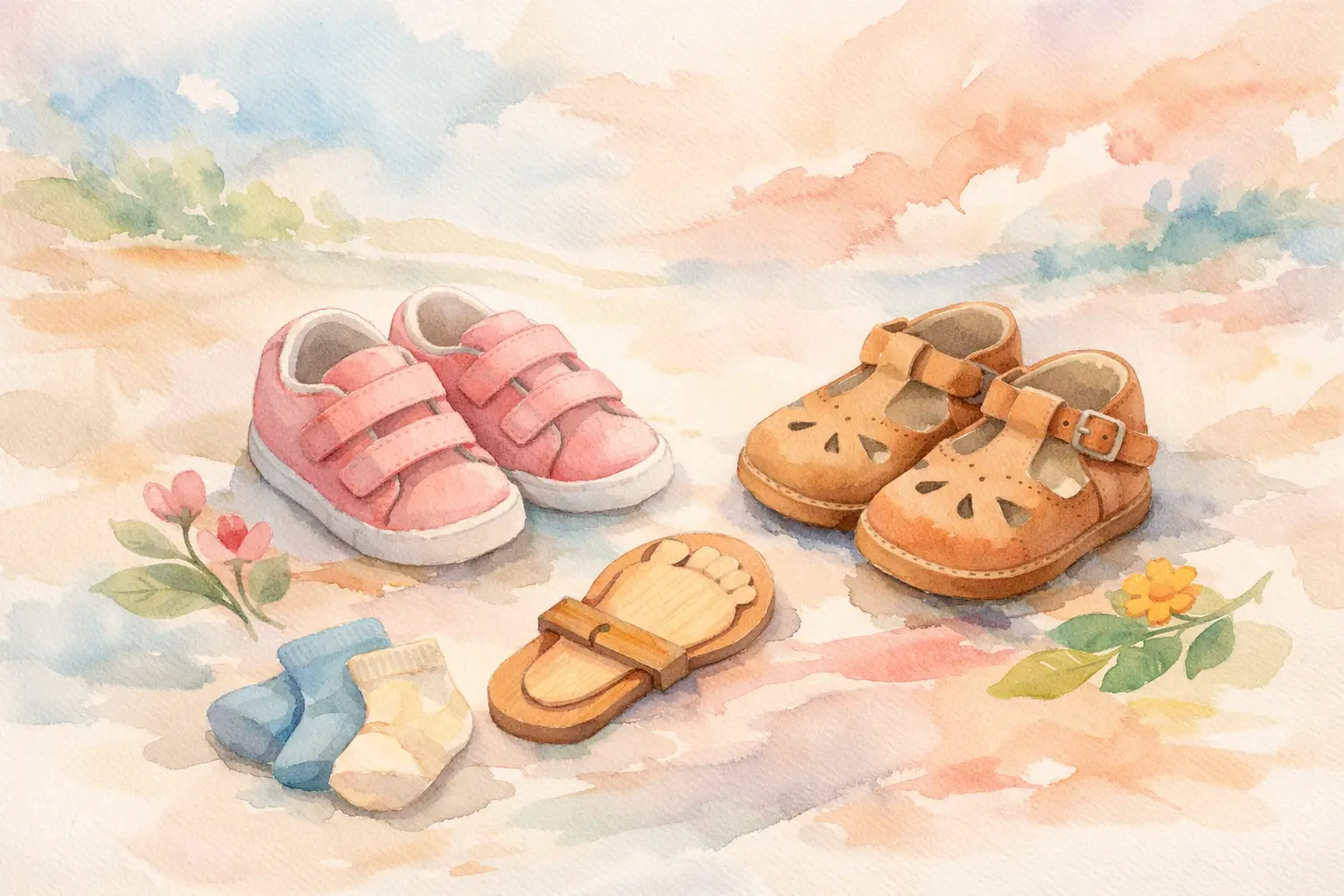
A toddler can outgrow a pair of shoes just when they have finally learned to put them on by themselves. That is why a reliable guide to toddler shoe sizing can make everyday shopping feel much easier. The right size helps little feet stay comfortable through playground laps, preschool mornings, family errands, and all the joyful running in between.
Toddlers are not always able to explain that a shoe feels tight. Some will keep playing in shoes that pinch, while others will refuse to wear them at all. A quick measurement, a careful fit check, and a little room for growth can help you choose shoes they will be happy to wear.
Toddler feet grow quickly, especially during the early walking years. A shoe that fit well a few months ago may suddenly feel short, narrow, or difficult to fasten. Since young children are active and their feet are still developing, comfort is about more than avoiding complaints. Shoes should allow natural movement while providing the support and protection a child needs for the activity ahead.
Size labels are useful starting points, but they are not a guarantee. Just as adult clothing sizes differ by brand, toddler shoe sizing can vary from one manufacturer to another. A child may wear one size in a roomy sneaker and need a different size in a structured sandal or dress shoe. Check the individual brand’s size chart whenever one is available, then use your child’s actual foot measurement as your best guide.
The simplest way to measure is at the end of the day, when feet are often at their largest. Have your toddler wear the type of socks they will usually wear with the shoes. For sandals, measuring barefoot is usually most helpful.
Place a sheet of paper flat against a wall on a hard floor. Have your child stand with one heel gently touching the wall and their weight spread naturally over both feet. Mark the paper at the tip of the longest toe. It is not always the big toe, so look carefully. Measure from the edge of the paper that touched the wall to the mark, using inches or centimeters.
Measure both feet. It is common for one foot to be slightly longer or wider than the other, and you should choose a size that fits the larger foot. If your child squirms or curls their toes, try again after a snack, story, or a few minutes of play. A relaxed standing measurement is more useful than a rushed one.
After finding the length of the longer foot, compare it to the shoe brand’s chart and leave a little extra space at the toe. For most closed-toe toddler shoes, about a thumb’s width, or roughly one-half inch, between the longest toe and the front of the shoe is a practical target. This gives toes room to move and allows for reasonable growth without making the shoe loose and hard to walk in.
More space is not always better. A shoe that is too long can cause tripping, heel slipping, and extra rubbing. The goal is a secure fit with room to wiggle, not a shoe that looks oversized.
Length gets the most attention, but width matters just as much. A toddler with wider feet may need a wide option, a rounded toe box, or a style with adjustable closures. Signs that a shoe may be too narrow include deep marks across the top of the foot, bulging at the sides, frequent tugging at the shoes, or resistance when putting them on.
Look for a toe box that lets toes spread naturally. Pointed or overly stiff styles can feel restrictive, even if the length seems right. For everyday play, a flexible sole that bends near the ball of the foot is generally more comfortable than a sole that is hard to bend at all. At the same time, the heel should feel stable rather than floppy.
Once the shoe is on, check the heel. It should stay in place during walking, with only a small amount of natural movement. Constant heel slipping can lead to blisters and may mean the shoe is too big, too wide, or not secured properly. Laces, hook-and-loop straps, buckles, and elastic closures can all work well when adjusted to your child’s foot.
Trying shoes on is most useful when your toddler stands and walks, not just when they sit in a cart or on the floor. Have them walk across a room, take a few quick steps, and squat down to pick up a toy. Watch for tripping, awkward steps, or attempts to pull the shoes off.
Use a gentle press at the front of each shoe to check toe room. If you cannot feel where the longest toe ends, remove the shoe and compare the foot to the insole if it comes out. This can be easier than guessing through a thick upper. Check that the shoe opens wide enough to put on without forcing the foot inside.
A good fit should feel secure but never squeezed. Your child should be able to walk, climb, and play without red marks or a struggle at the end of the day. New shoes do not need a painful break-in period. While some materials may soften with wear, a shoe that is clearly tight in the store will not become the right size later.
For many toddlers, measuring feet every two to three months is a sensible routine. Children who are in a fast growth phase, starting a new season, or wearing their favorite pair every day may need checks more often. Before buying boots for colder weather or sandals for summer, measure again rather than relying on the last size you purchased.
Keep an eye out for everyday clues that a size change may be due. Your toddler may suddenly have trouble getting shoes on, ask for them to be removed, develop blisters, or leave deeper-than-usual sock lines and pressure marks. Worn-down toes or a sole that looks unusually uneven can also signal that the shoes no longer fit well or are no longer supporting active play.
Boots usually need enough room for thicker socks, but avoid sizing up so much that your child slides around inside them. Sandals should fit securely at the heel and across the straps, with toes not hanging over the front edge. Water shoes need a close, comfortable fit because excess movement can cause rubbing when wet.
Dress shoes are often worn for shorter periods, but they still need the same basic toe room and width. Do not choose a smaller size simply because a formal shoe looks neater. Comfort helps children enjoy the celebration, photo day, or family gathering instead of focusing on sore feet.
Buying far ahead can seem budget-friendly, but shoes stored for a future season may not match a toddler’s growth pattern or the weather when the time comes. It is usually better to buy for the current need with modest growing room. If you do purchase ahead, keep the receipt and recheck the fit before removing tags or wearing the shoes outside.
Hand-me-down shoes can be useful when they are in excellent condition, but inspect them closely. Shoes shaped by another child’s gait may have worn soles, stretched areas, or uneven support. Lightly worn special-occasion shoes may be fine, while everyday sneakers with a collapsed heel or uneven tread are better replaced.
Another common mistake is choosing shoes based on age alone. A label such as “2T” or a general age range can help narrow a search, but it cannot replace a measurement. Every child grows at their own pace, and a well-fitting shoe is always more valuable than the number printed on the box.
For daily wear, prioritize breathable materials, a comfortable toe box, a flexible sole, and closures your child can manage as their skills grow. Easy-on styles can make rushed mornings smoother, while adjustable straps can help accommodate slight differences in width. For outdoor play, look for durable soles with traction that suit the surfaces your child uses most.
At Everything Childrens Outlet, families can shop for practical footwear alongside the clothing, accessories, and everyday essentials that keep growing kids ready for their next adventure. Choosing the right size first makes every pair a better value, because comfortable shoes are the ones children can truly enjoy.
Little feet have big work to do. Measure often, trust the fit more than the label, and let your toddler take a few happy test steps before the shoes head home.