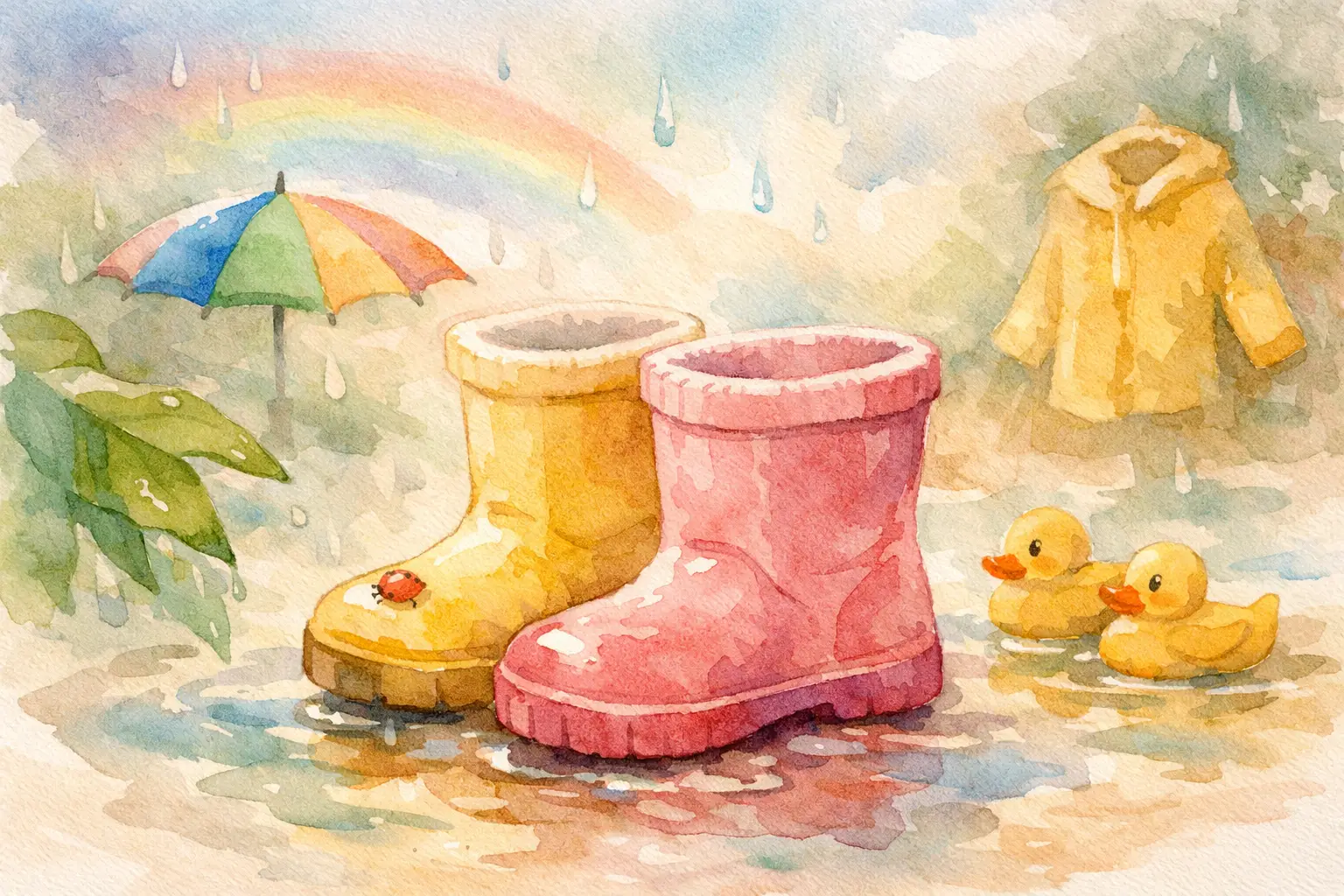
A rainy morning can turn a quick walk to the car into a full puddle expedition. Knowing how to choose toddler rain boots helps your little one enjoy the splashy fun while keeping their feet dry, comfortable, and steady on wet ground. The best pair is not always the brightest color or the most familiar character print. It is the pair your toddler can wear happily, walk safely in, and pull on without a daily struggle.
For parents, rain boots are a practical seasonal essential that can make daycare drop-offs, backyard play, and family outings a little easier. Here is what to look for before you pick a pair.
Rain boots should feel roomy, but they should not be loose. A boot that is too tight can pinch little toes and make walking uncomfortable. A boot that is too large can slip at the heel, rub the ankle, and make your toddler more likely to trip.
Have your child wear the type of socks they will usually use with boots, then measure both feet. Many children have one foot that is slightly larger, so fit the larger foot. As a general rule, leave about a thumb’s width of growing room between the longest toe and the end of the boot. That gives feet space to move without turning every step into a clomp.
Pay attention to the opening at the top, too. Your toddler’s foot should slide in without force, but the boot should not gape so widely that it falls off during a run through the yard. If your child has wider feet or a higher instep, a wider shaft and flexible upper can make getting dressed much more pleasant.
Once the boots are on, ask your child to take a few steps on a clean indoor floor. A small amount of heel movement is normal in rain boots, especially compared with sneakers. But if the heel lifts dramatically, the foot slides from side to side, or your child walks awkwardly, try another size or style.
Toddlers may not be able to explain that a boot feels wrong. Watch for clues instead: pulling at the boots, refusing to walk, stumbling more than usual, or asking to take them off shortly after putting them on.
Most toddler rain boots are made from rubber, PVC, or a similar waterproof material. The goal is simple: water stays outside, even when your child is standing in a shallow puddle or wet grass.
Rubber boots are a classic choice because they are flexible, durable, and easy to wipe clean. Some families prefer natural or synthetic rubber options because they often feel softer and bend more naturally as children walk. PVC boots can be budget-friendly and colorful, but they may feel stiffer, particularly in colder temperatures.
Look closely at the construction. A one-piece waterproof exterior is ideal because it reduces places where water can sneak in. Decorative seams are fine, but the boot should not have cracks, thin spots, or a poorly attached sole. A boot only needs to be waterproof up to its shaft – if your toddler sits in a deep puddle, water can still pour in from the top.
For chilly or wet seasons, a light fabric lining can add comfort. Heavily insulated boots are useful for cold, slushy weather, but they may be too warm for spring rain. Think about when your child will actually wear them. One versatile unlined or lightly lined pair often works well for much of the year when paired with the right socks.
Wet sidewalks, slick playground surfaces, and muddy paths call for a sole with real grip. Turn the boot over and inspect the tread. You want a textured outsole with grooves, lugs, or raised patterns that help channel water away from the bottom of the boot.
A completely smooth sole may look neat, but it offers less traction on wet surfaces. Deep, chunky treads can be helpful for mud and uneven ground, although an overly heavy sole may make walking harder for a new walker. The best balance is a flexible sole with a clear tread pattern and enough grip for everyday adventures.
Boots should bend slightly at the ball of the foot. They do not need to fold in half, but a rigid boot can make toddlers take stiff, shuffling steps. Flexibility supports more natural movement, while a supportive sole helps little feet stay stable.
Toddler footwear can feel heavy fast. A pair that seems only slightly weighty in your hand may feel tiring after ten minutes of chasing bubbles or exploring the park. Choose boots that are sturdy without being bulky.
Your child should be able to lift their feet comfortably and climb a step without dragging the toes. Lightweight boots are especially helpful for younger toddlers who are still building confidence with walking, running, and balancing.
Rain boots are one of the first kinds of shoes many toddlers can learn to put on by themselves. That small success can make getting ready feel more fun for everyone.
Wide openings are easier for little feet to slide into. Pull handles at the top of the shaft are especially useful, giving children a place to grip while they practice. Handles should be securely attached and smooth enough that they do not irritate hands or catch on clothing.
A front-and-back handle design can help toddlers tell which way the boot goes. Bright colors, different pictures on each boot, or a clear toe shape can also make left and right less confusing. If a boot takes a lot of twisting, tugging, or adult assistance to get on, it may not be the most practical choice for busy mornings.
Taller rain boots offer more protection from puddles, wet grass, and mud. They are a great option for children who love outdoor play or regularly walk through damp areas. The trade-off is that tall shafts can feel warmer and may rub behind the knee if the fit is not right.
Shorter rain boots are easier to pull on and often feel lighter. They work nicely for quick trips outside, light rain, and kids who dislike the feeling of a tall boot around their calf. However, they will not keep feet as dry in deeper puddles.
Think about your family’s routine before choosing. A toddler who walks to daycare in rainy weather may benefit from a taller, grippy boot. A child who mainly needs something for quick backyard play may be perfectly happy with a shorter, lightweight pair.
Fun prints, cheerful colors, animals, dinosaurs, and glittery details can make toddlers excited to wear their boots. That matters. Children are more likely to put on footwear they genuinely like, which is a win when the forecast is wet.
Still, comfort and safety come first. If your child loves a particular design but the boot is too stiff, too heavy, or slips at the heel, look for a similar style that fits better. A practical pair can still feel joyful, and a favorite color can make rainy-day gear feel like part of the adventure.
For families shopping for several growing-kid essentials at once, Everything Childrens Outlet makes it easier to find practical footwear alongside everyday clothing and outdoor-ready accessories. Choosing a pair that suits your child’s real routine helps you get more value from every wear.
Rain boots are easy to care for, but a few habits can help them stay in good shape. After a muddy outing, rinse or wipe them with cool water and a soft cloth. Let them air-dry upright away from direct heat, radiators, and strong sunlight, which can cause some materials to dry out or crack over time.
Avoid storing boots folded, crushed under heavier shoes, or filled with damp socks. If the inside gets wet, remove the socks and let the boots dry fully before the next outing. Check the soles and exterior every so often for worn tread, splits, or holes.
Rain boots are designed for wet-weather fun, not all-day wear. For long days indoors, playground climbing, or warmer weather, sneakers are usually more breathable and supportive. Switching footwear when the activity changes keeps little feet more comfortable.
The right rain boots give your toddler a simple invitation: go outside, splash safely, and enjoy the weather. Choose a pair that fits well today, leaves a little room to grow, and makes your child smile when the clouds roll in.