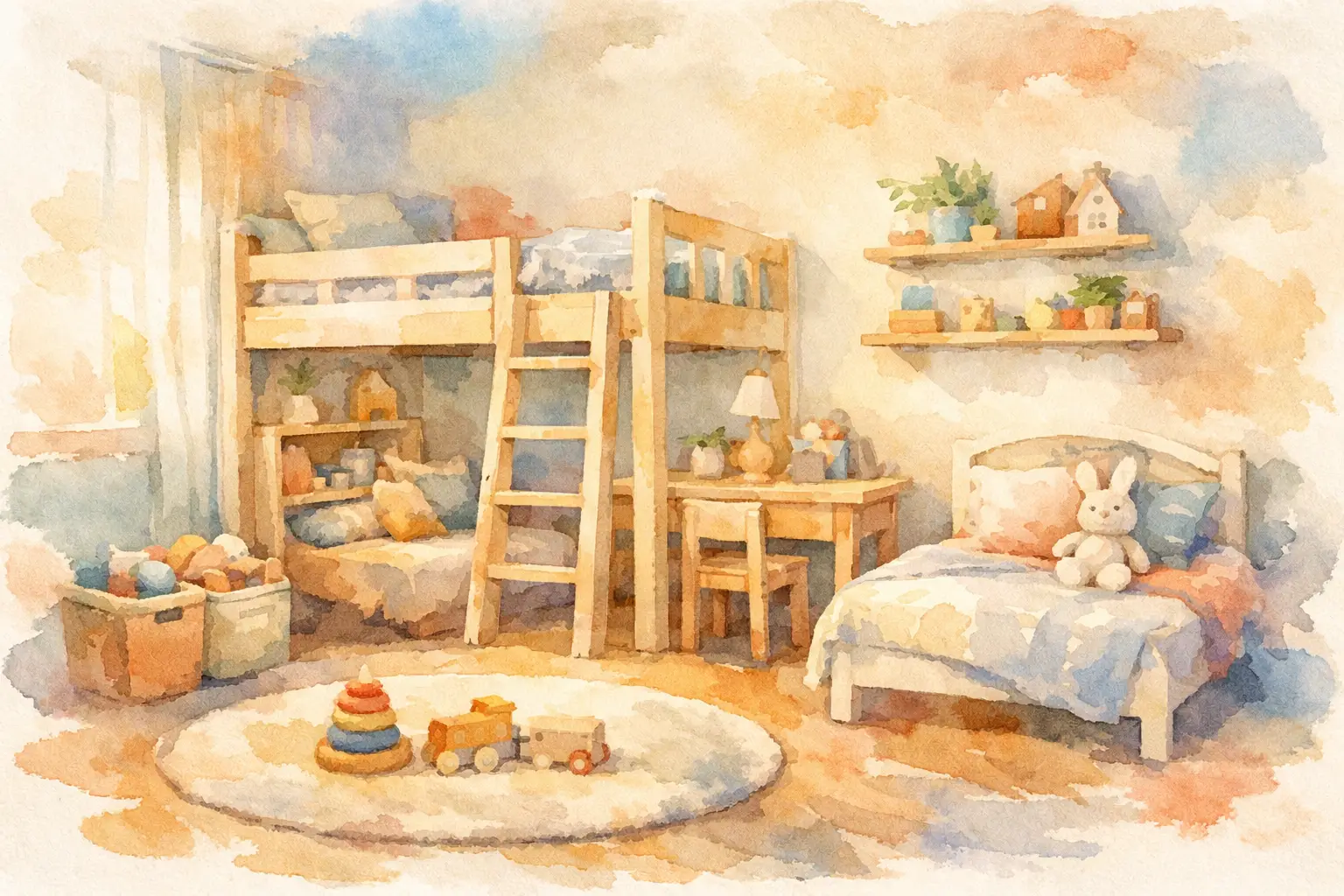
When your child’s bedroom has to hold sleep, play, storage, and a little breathing room, every inch starts to matter. The right kids furniture for small rooms can make a tight space feel calmer, easier to organize, and much more comfortable for everyday family life.
A small room does not mean your child has to give up comfort or personality. It just means the furniture has to work harder. The best pieces do more than fill space – they create it. A bed can add storage, a table can fold away, and a bookcase can help define where toys end and bedtime begins.
Furniture for a compact kids’ room needs to solve at least two problems at once. It should fit the space physically, and it should also support how your child actually uses the room. That usually means choosing pieces with built-in storage, a smaller footprint, or a flexible design that can keep up as your child grows.
Safety matters even more in smaller rooms because children move through tighter pathways and play closer to furniture edges. Rounded corners, stable frames, and easy-to-reach storage can make the room feel more kid-friendly without adding clutter. Low-profile pieces also help the room look more open, which is a simple design trick that makes a real difference.
In most kids’ rooms, the bed is the biggest item by far. If you are trying to save floor space, this is the first place to make a smart choice. A bed with built-in drawers underneath can replace a bulky dresser, which is a big win in a small bedroom.
Loft beds can also work well, especially for older kids, because they free up the floor underneath for a desk, reading nook, or toy storage. Still, loft beds are not the right answer for every family. Younger children may not be ready for the height, and some rooms with lower ceilings can end up feeling crowded rather than clever.
A daybed is another practical option if the room needs to feel flexible. During the day, it can work like a sofa for reading or quiet play. At night, it is still a comfortable sleeping space. If sleepovers are common, a trundle bed may make sense, but only if you truly have room to pull it out comfortably.
A storage bed often gives you the most value in a small room because it combines two major needs in one piece. Drawers underneath are useful for off-season clothing, extra bedding, or less frequently used toys. That can free up closet space and help the room stay tidier with less effort.
The trade-off is that storage beds can be heavier and harder to move. If you like to rearrange furniture often, or if your child’s room may change functions soon, that is worth considering before you buy.
Small rooms usually fall apart when storage is too complicated. If kids cannot reach their bins, open their drawers, or see what they have, things end up on the floor. Furniture that supports simple routines is often better than furniture that looks impressive but takes extra effort to use.
Low dressers can do double duty as a surface for books, a lamp, or a few favorite decor pieces. Cube storage is helpful too because it can hold baskets for toys, art supplies, or shoes without feeling too heavy for the room. Open shelving works best when there is some restraint. A few baskets and a few display items feel cheerful. Too many visible items can make a small room feel busy fast.
When there is not much room to spread out, go up. Tall, narrow bookcases and wall-friendly shelving can increase storage without eating up valuable play space. This approach works especially well for books, keepsakes, and items that do not need to be accessed every hour.
That said, taller furniture needs to be secure. Anchoring pieces properly is a must in any child’s room, and especially in spaces where kids may pull, climb, or bump into furniture during play.
Not every child needs a full desk setup in their bedroom. For some families, homework happens at the kitchen table and crafts happen in a shared family area. In a small room, skipping unnecessary furniture can be the smartest choice.
If your child does need a study spot, keep it compact. A slim desk, wall-mounted surface, or fold-down table can provide function without taking over the room. Pair it with a chair that tucks in neatly and does not have a wide base. You want the area to feel useful, not crowded.
For younger children, a small activity table with storage can often be more practical than a traditional desk. It supports coloring, puzzles, and building time while still fitting a child-sized routine.
One common mistake in small kids’ rooms is choosing furniture that is technically beautiful but too large for the space. Oversized beds, wide dressers, and deep shelves can make a room feel blocked off even if they fit on paper. Looking for kid-friendly proportions usually creates a better result than trying to squeeze in full-size pieces.
Smaller-scale furniture also makes it easier for children to use their room independently. They can reach books, put away toys, and get dressed with less help. That kind of everyday independence supports confidence and keeps family routines moving more smoothly. For a deeper walkthrough, see our 12 Educational Toys Ideas Parents Will Use.
Even the best kids furniture for small rooms will feel wrong if the layout is cramped. Try to preserve a clear path from the door to the bed and from the bed to the closet or dresser. When kids can move easily through the space, the whole room feels calmer.
It helps to place the largest piece first, usually the bed, and build around it. From there, add only the furniture the room truly needs. A compact dresser and one storage unit may serve the space better than several small pieces that create visual clutter.
Parents often feel pressure to maximize every corner, but children benefit from a little open floor area. That empty space is not wasted. It is where block towers get built, books get spread out, and imaginations get room to work.
In a small bedroom, that often means choosing fewer, more useful items rather than trying to include every category of furniture. A room that is slightly simpler usually feels better day to day.
Saving space should not mean settling for flimsy furniture. Kids use their rooms hard. Drawers get tugged, shelves get loaded unevenly, and beds become forts more often than adults would plan for. Durable materials and sturdy construction help your purchase last longer and feel safer.
Easy-clean finishes are worth looking for too. Smudges, stickers, and the occasional mystery mark are part of childhood. Furniture that wipes down easily keeps the room looking fresher without adding work to your routine.
This is where affordability and practicality need to meet. The least expensive option is not always the best value if it needs replacing quickly. At the same time, many families do not want to overinvest in furniture their child may outgrow in a few years. A solid middle ground usually makes the most sense.
Small rooms can still be fun. Colorful bins, playful bedding, and a few well-chosen decor accents can give the room personality without taking up extra space. The furniture itself often works best in lighter finishes or simple shapes that keep the room feeling open.
That does not mean everything has to be plain. A cute reading chair, a house-frame bed, or bright storage baskets can bring joy into the room. The key is balance. In a smaller bedroom, one or two playful focal points tend to work better than lots of competing details.
It helps to think about how long you want the furniture to last. A toddler room has different needs than a room for an early elementary school child. If you are shopping on a budget, prioritize pieces that can bridge stages, like a dresser with lasting storage value or a bed frame that still works a few years from now.
Some flexible designs are worth the investment because they reduce the need to rebuy. Others sound convenient but do not get used the way families expect. It depends on your child’s age, your room size, and how much change you expect in the next couple of years.
At Everything Childrens Outlet, the smartest picks are the ones that support real family life – safe, space-saving, and easy for growing kids to enjoy every day. A small room can still be a happy, organized place when the furniture earns its spot and helps your child feel right at home.