Choosing the right baby gear is one of the most important — and most overwhelming — decisions new parents face. With hundreds of products competing for your attention, it’s easy to feel lost before you’ve even added anything to your cart. However, the best baby gear isn’t necessarily the most expensive or the most talked-about. It’s the gear that fits your life, keeps your child safe, and holds up to the demands of daily use week after week.
In this complete guide, we cover every essential category of baby gear — from strollers and car seats to high chairs, baby monitors, diaper bags, and nursery essentials. Furthermore, we explain exactly what to look for, what trade-offs to expect, and how to shop with confidence so every purchase genuinely supports your family. For a deeper walkthrough, see our How to Choose Safe Toys for Toddlers: The Complete Parent’s Guide.
Quick Navigation: Jump to Strollers · Car Seats · High Chairs · Baby Monitors · Diaper Bags · Nursery Essentials · Feeding Gear · FAQ
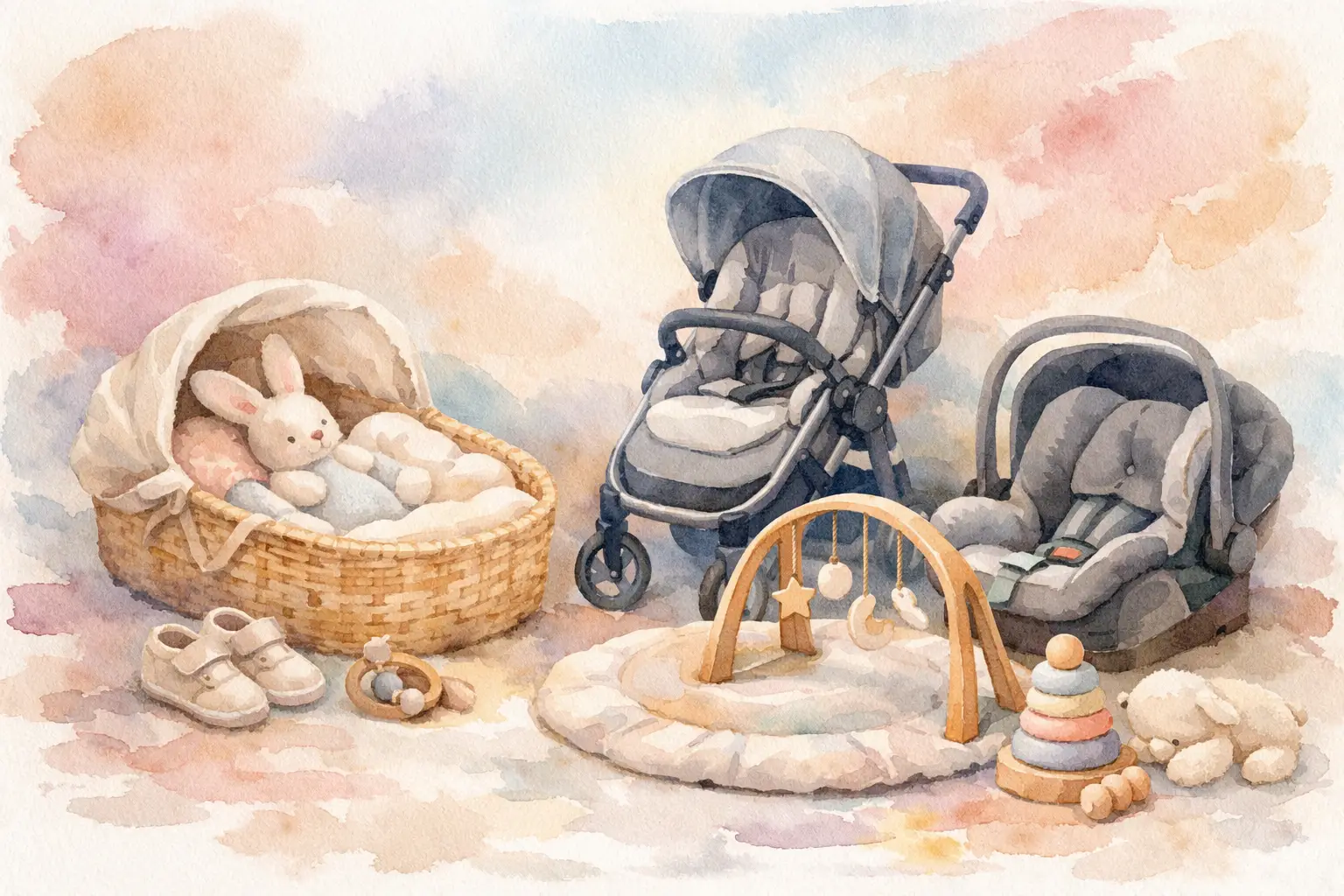
Baby gear refers to the full range of products designed to support infants and toddlers through every stage of early development — from the moment they come home from the hospital through their first years of growth. Specifically, this includes safety equipment like car seats and baby monitors, mobility gear like strollers and carriers, feeding essentials like high chairs and bottles, sleep products like bassinets and cribs, and everyday items like diaper bags and play mats.
Good baby gear does three things well. First, it keeps your child physically safe. Second, it makes daily routines — feeding, sleeping, traveling, playing — manageable for caregivers. Third, it provides genuine value over time, meaning it doesn’t fall apart, become dangerous, or need replacing every few months. Therefore, understanding each product category before you buy is the smartest way to spend your budget.
In the United States, baby gear safety is regulated primarily by the Consumer Product Safety Commission (CPSC), which sets mandatory standards for products like cribs, high chairs, strollers, and car seats. Similarly, the American Academy of Pediatrics (AAP) publishes evidence-based guidelines on safe sleep, feeding, and child development that should inform every purchase.
Before buying any baby gear, always check that it meets current safety standards, has not been recalled, and is appropriate for your child’s current age and weight. You can verify recalls for free at the official U.S. recalls database. This one step takes two minutes and can prevent serious harm.
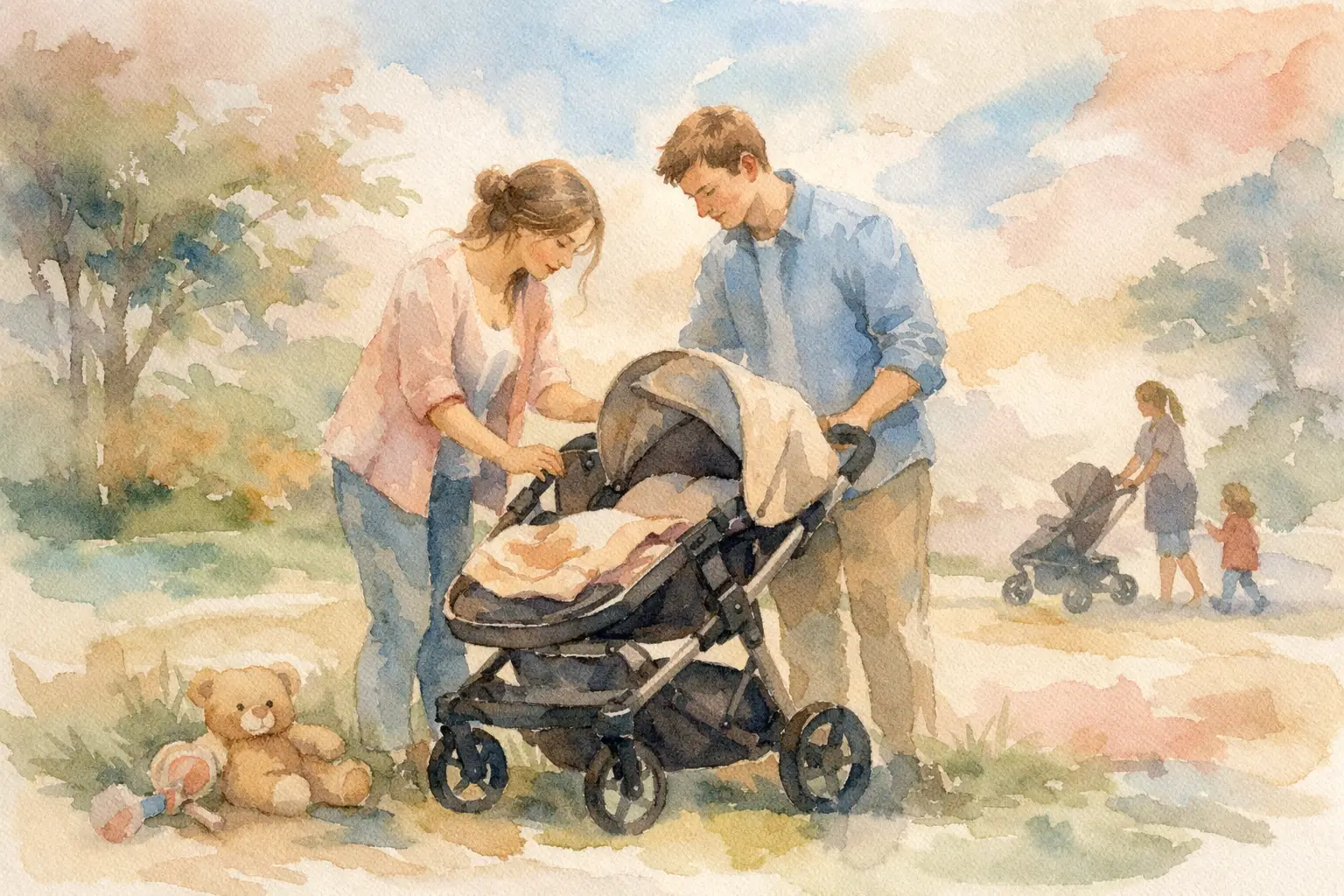
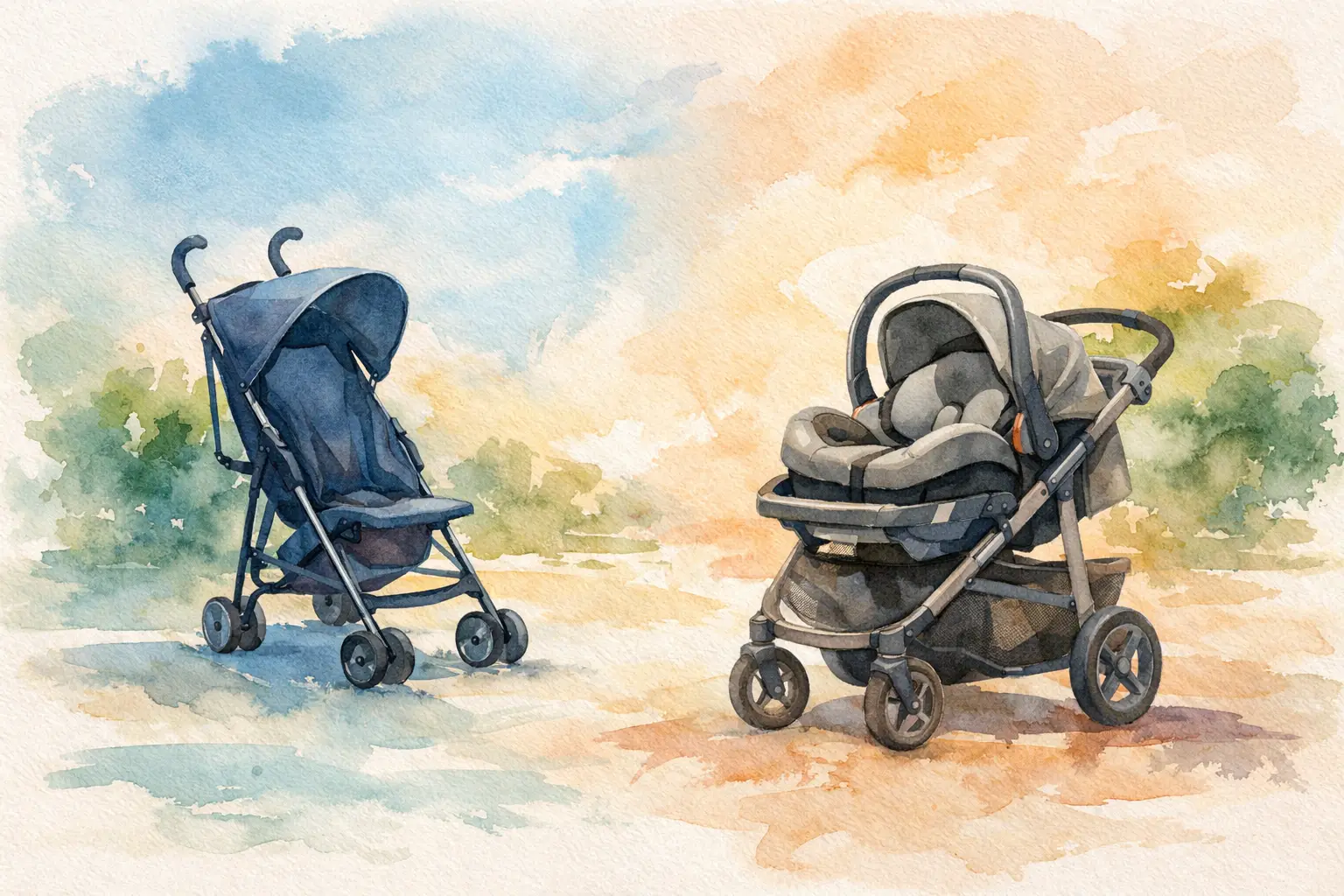
A stroller is arguably the most-used piece of baby gear you will own. However, with dozens of styles available, choosing the right one requires thinking about your specific lifestyle — not just what looks good in a showroom.
Safety features matter most. Look for a five-point harness system, reliable wheel locks, and a sturdy frame that doesn’t wobble when you push it on uneven ground. In addition, check the canopy coverage — a larger canopy protects against sun and light rain without requiring you to stop and adjust.
From a practical standpoint, consider the fold mechanism. If you do the parking-lot stroller fold ten times a week, you’ll want something intuitive and fast. Similarly, think about the storage basket underneath. A roomy basket that’s genuinely accessible — not just technically present — makes outings far more manageable.
💡 Parent Tip: Before buying, push the stroller one-handed. If it pulls sharply to one side, the wheels may need alignment — and that won’t improve with use. Test this in the store or watch for it in video reviews.
Our complete list for baby essentials includes stroller recommendations sorted by lifestyle and budget, so you can compare the features that matter most to you. For a deeper walkthrough, see our Baby Gear Essentials: The Complete Checklist for 2025.
No piece of baby gear carries higher stakes than a car seat. According to the CPSC, car crashes are a leading cause of injury and death among children in the U.S. — and a properly installed, correctly used car seat dramatically reduces that risk. Consequently, this is the one category where price should never be the deciding factor.
Studies consistently show that a significant percentage of car seats are installed or used incorrectly. Specifically, common errors include a harness that is too loose, the chest clip placed too low, rear-facing seats installed at the wrong angle, and using a seat that has already expired. Car seats have expiration dates — typically 6 to 10 years from manufacture — and using one past its expiration is unsafe.
Furthermore, many fire stations and child passenger safety technician (CPST) programs offer free installation checks. Taking 30 minutes to have a certified technician check your installation is one of the highest-value safety steps any parent can take with their baby gear.
A high chair takes up real estate in your kitchen or dining area, so it needs to genuinely earn that space. In addition, it becomes the center of action at every mealtime — meaning it must handle daily mess, repeated wiping, and enthusiastic toddlers who test every surface.
Full-size high chairs offer the most stability and the longest usability window, especially those with adjustable seat heights and footrests. However, they require dedicated floor space. Clip-on chairs attach directly to a table edge and are ideal for small apartments or travel — but check that your table’s thickness is compatible before you buy.
Booster seats sit on a regular dining chair and are often the most affordable option. They work well for older babies and toddlers. As a result, many families find they need one primary high chair and a secondary portable option for outings or grandparents’ homes.
Our adjustable high chair with 5-point harness is a strong example of baby gear that combines genuine safety with day-to-day practicality at a family-friendly price point.
A baby monitor gives parents the ability to check on a sleeping baby without entering the room and potentially waking them. Specifically, modern monitors range from simple audio-only devices to sophisticated video monitors with night vision, two-way audio, temperature sensors, and even breathing movement detection.
Advertised range figures are measured in open-field conditions. In practice, walls and floors reduce range significantly. Therefore, for a typical home or apartment, a monitor rated to 1,000 feet will generally perform reliably. If your home has thick walls or multiple floors, look for DECT technology — a digital frequency standard that resists interference and gives you clearer sound across longer distances.
Battery life matters most if you carry the parent unit through the house all day. Look for a minimum of 8 hours on a single charge, and check whether the unit can be used while plugged in — many parents simply keep it docked during the day and handheld during night checks.
A diaper bag is carried on virtually every outing for the first two or three years of your child’s life. Consequently, it deserves more thought than most parents give it. The right diaper bag combines smart organization, durable materials, comfortable carrying options, and a design that works with your real life — not just in product photos.
Insulated pockets keep bottles at the right temperature and separate wet items from dry ones. A dedicated changing pad (included or compatible) means you’re not hunting for a surface in a public restroom. Furthermore, wipe-clean interior lining eliminates the stress of spills — because spills are inevitable.
Sturdy, padded straps matter more than most people realize. Carrying 10–15 pounds of baby supplies for hours at a time with thin, flimsy straps causes genuine discomfort. Similarly, external stroller attachment clips turn your diaper bag into hands-free carry when you’re pushing the stroller.
💡 Parent Tip: Before buying, count the pockets and mentally assign each one a purpose — diapers, wipes, phone, wallet, snacks, spare outfit, changing pad. If you run out of pockets before you run out of items, look for a design with more compartments.
The nursery is where your baby spends the most time in their earliest months. As a result, the gear you choose for that space directly affects both your baby’s safety and your own ability to get through those critical first weeks of sleep deprivation.
The AAP’s safe sleep guidelines recommend that babies sleep alone, on their backs, in a firm, flat, bare sleep surface — no bumpers, no loose blankets, no soft objects. A crib or bassinet that meets current CPSC standards fulfills this requirement. Specifically, look for slat spacing no wider than 2 3/8 inches, which prevents a baby’s head from becoming entrapped.
Bassinets are ideal for the first 3–4 months when room-sharing is recommended. They’re smaller, more portable, and allow you to keep your baby within arm’s reach at night. However, most bassinets have weight limits around 15–20 pounds, so you’ll need to transition to a full crib when your baby reaches that milestone.
Our electric baby swing bassinet with Bluetooth is a popular choice for newborn sleep support, combining gentle motion with a safe sleep surface for early months.
Baby swings use gentle motion to soothe fussy infants and can be genuinely lifesaving for tired parents. However, they are not safe sleep surfaces for overnight or unsupervised sleep. Always move a sleeping baby from a swing to a firm, flat sleep surface.
Bouncers are another soothing option. They’re smaller, less expensive, and easier to move from room to room. Some offer vibration and toy attachments for visual stimulation. As your baby grows, both swings and bouncers become less essential — so consider this category carefully before spending a large amount.
A dedicated changing table keeps everything organized and at the right height, reducing the back strain of changing on the floor. Furthermore, always use the safety strap — even when you’re “just grabbing a wipe.” Babies can roll off a changing surface in the time it takes to reach a few inches.
Many parents skip a standalone changing table and instead use a dresser-top changing pad. This is a practical space-saver as long as the dresser is anchored to the wall against tipping and the pad has a safety strap and raised edges.
Feeding is one of the most frequent activities of babyhood — newborns eat every 2–3 hours around the clock. Therefore, having the right feeding gear in place before your baby arrives makes the entire experience significantly more manageable.
If you’re bottle feeding — whether with breast milk or formula — you’ll need a reliable set of bottles, a bottle brush, a drying rack, and ideally a bottle sterilizer. Specifically, look for BPA-free, phthalate-free bottles. Most mainstream brands now meet these standards, so focus your selection on nipple flow rate (matching your baby’s age and feeding pace) and anti-colic features if your baby struggles with gas.
When your baby is ready for solid foods — typically between 4 and 6 months based on developmental readiness rather than a fixed date — you’ll need soft-tip spoons, silicone suction bowls, and a reliable sippy cup or open cup for water. In addition, a full-coverage bib (the kind that catches food in a front pocket) makes cleanup dramatically faster.
As oral hygiene becomes relevant, introducing good habits early matters. Our 360° sonic electric toothbrush for kids is designed for small mouths and makes brushing easy from the very first teeth.
Babywearing — carrying your infant in a carrier or wrap against your body — has been practiced across cultures for centuries. Research supports its benefits. It promotes bonding, can reduce crying in newborns, and gives parents hands-free mobility that a stroller can’t always provide.
The T.I.C.K.S. rule is the standard safety guideline for babywearing. Specifically, it stands for: Tight (carrier should be snug), In view at all times (you can see your baby’s face), Close enough to kiss (baby’s head is near enough for a kiss), Keep chin off chest (baby’s airway is open), Supported back (baby’s back is in a natural curved position, not slumped). Following these guidelines keeps your baby safe in any carrier style.
Play gear supports your baby’s physical and cognitive development from their very first weeks. Moreover, the right play surfaces and toys can support tummy time (critical for neck and core strength), sensory exploration, and eventually crawling and pulling up.
A good play mat should be large enough for tummy time and rolling (at least 4 feet by 4 feet), padded enough to cushion accidental head bumps, and made from non-toxic, phthalate-free materials. Furthermore, a washable surface or removable cover is essential — it will need frequent cleaning.
Activity gyms — play mats with hanging toy arches — are particularly valuable in the 0–6 month stage. They give babies visual and tactile stimulation during tummy time and provide overhead targets to bat at, which develops hand-eye coordination. As a result, many parents cite activity gyms as one of the baby gear items they got the most value from.
Shopping for baby gear can feel overwhelming, but a structured approach makes it manageable. Specifically, the following steps will help you make confident decisions without overspending or missing critical items.
It’s easy to assume that safer or more stylish baby gear must cost more. In reality, many mid-range products offer better day-to-day performance than premium options that are priced primarily for their brand name. Specifically, for categories like play mats, nursing pillows, and baby bath products, quality products exist at every price point.
That said, for high-stakes categories — particularly car seats and sleep surfaces — do not choose based on price alone. A car seat that costs $80 less than the comparable model isn’t worth the compromise if it scores lower in independent crash testing or has a history of harness-related complaints.
A curated retailer can simplify this process enormously. Rather than sorting through thousands of options, families can shop by age, category, and need. Everything Children’s Outlet focuses on affordable, practical baby gear and children’s products that prioritize what families actually need — without the pressure to overbuy.
No baby gear item is perfect in every dimension. Understanding the common trade-offs before you buy prevents post-purchase frustration and helps you make genuinely informed choices.
Knowing these trade-offs in advance doesn’t mean you’re settling. It means you’re choosing deliberately — picking the features that matter most for your specific family situation and letting go of the ones that don’t.
Before your baby arrives, the true essentials are a car seat (required to leave the hospital), a safe sleep surface (crib or bassinet with a firm, flat mattress), a diaper changing area with supplies, feeding gear appropriate to your feeding plan (bottles and pump, or nursing support), and a baby monitor. Everything else can be purchased after you identify what you actually need in practice.
Some second-hand baby gear is safe; some is not. It’s generally safe to buy used items like high chairs, play mats, bouncers, and strollers — as long as you verify they haven’t been recalled, all parts are present and undamaged, and no fabric is moldy or deteriorated. However, you should never buy a used car seat unless you can personally verify its full history, that it has never been in a crash, is not expired, and comes with the original manual. Similarly, do not buy a used crib that predates 2011 federal standards, which banned drop-side rail designs.
A realistic first-year baby gear budget can range from approximately $1,500 to $4,000 depending on the brands and categories you prioritize. Safety essentials like a car seat ($150–$400), crib ($200–$600), and baby monitor ($50–$300) account for a large portion. Strollers vary widely ($100–$1,200+). The remainder covers feeding gear, diaper supplies, clothing, and comfort items. It’s entirely possible to set up a safe, complete baby setup on a moderate budget by focusing on need over trend.
Many parents report that baby shoes (before walking), wipe warmers, baby food makers (when a regular blender works), crib bumpers (unsafe and banned in many states), and infant bath seats used without supervision are either unnecessary, barely used, or actively dangerous. Furthermore, novelty items designed primarily for gifting — rather than for actual parenting tasks — often sit unused after the first week.
The recommended approach is to register for the items you want, let the baby shower happen, and then purchase only what wasn’t gifted in the weeks before your due date. This prevents duplicate purchases and ensures you get the exact brands and models you researched. However, purchase your car seat and install it in your vehicle several weeks before your due date — not in the hospital parking lot after delivery.
You can check any baby gear item for recalls at recalls.gov or directly through the CPSC recalls page. Additionally, register your baby gear with the manufacturer after purchase — this ensures you receive automatic notification if a recall is issued after your purchase date.
The goal of choosing baby gear isn’t to own every product on a trending list. It’s to build a practical, safe set of essentials that genuinely makes caring for your child easier every single day. Above all, prioritize safety certification and recall-free status first, then evaluate each product for real-world usability, durability, and fit with your family’s lifestyle.
Consequently, the families who feel most confident about their baby gear are not necessarily the ones who spent the most. They’re the ones who researched deliberately, bought only what they genuinely needed, and chose products designed for real use — not just for impressions on a shelf. Use our complete baby essentials list to guide your planning, explore categories at Everything Children’s Outlet, and remember: the best baby gear is the gear that works for your baby, in your home, every day.