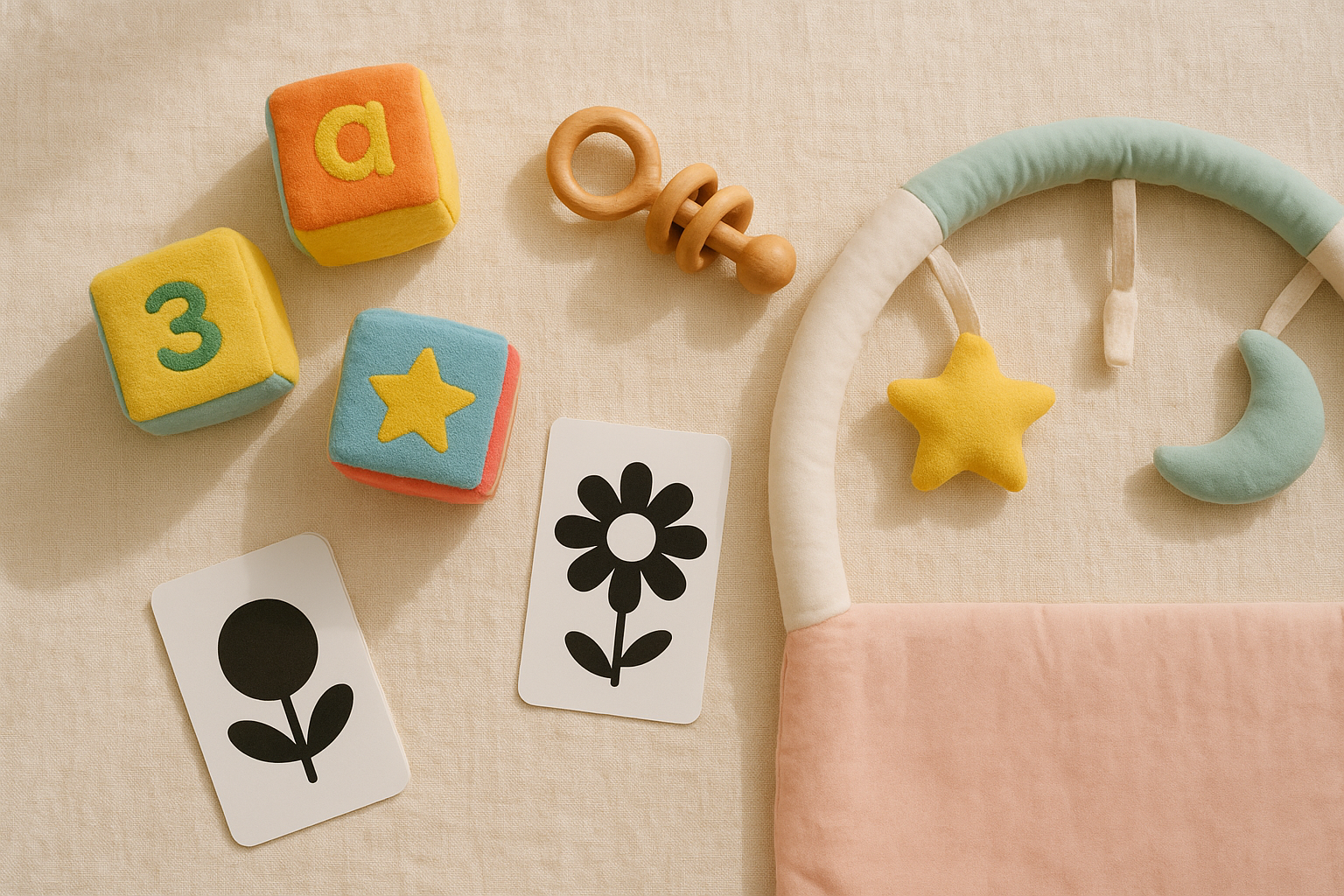
The best baby toys are more than just objects that keep little ones entertained—they are carefully designed tools that support healthy brain development, sensory growth, and emotional well-being from day one. Choosing the right toy at the right stage can make a meaningful difference in how your child explores, learns, and connects with the world around them. In this guide, you will find expert-backed picks, safety essentials, and a clear breakdown of what works at every age.
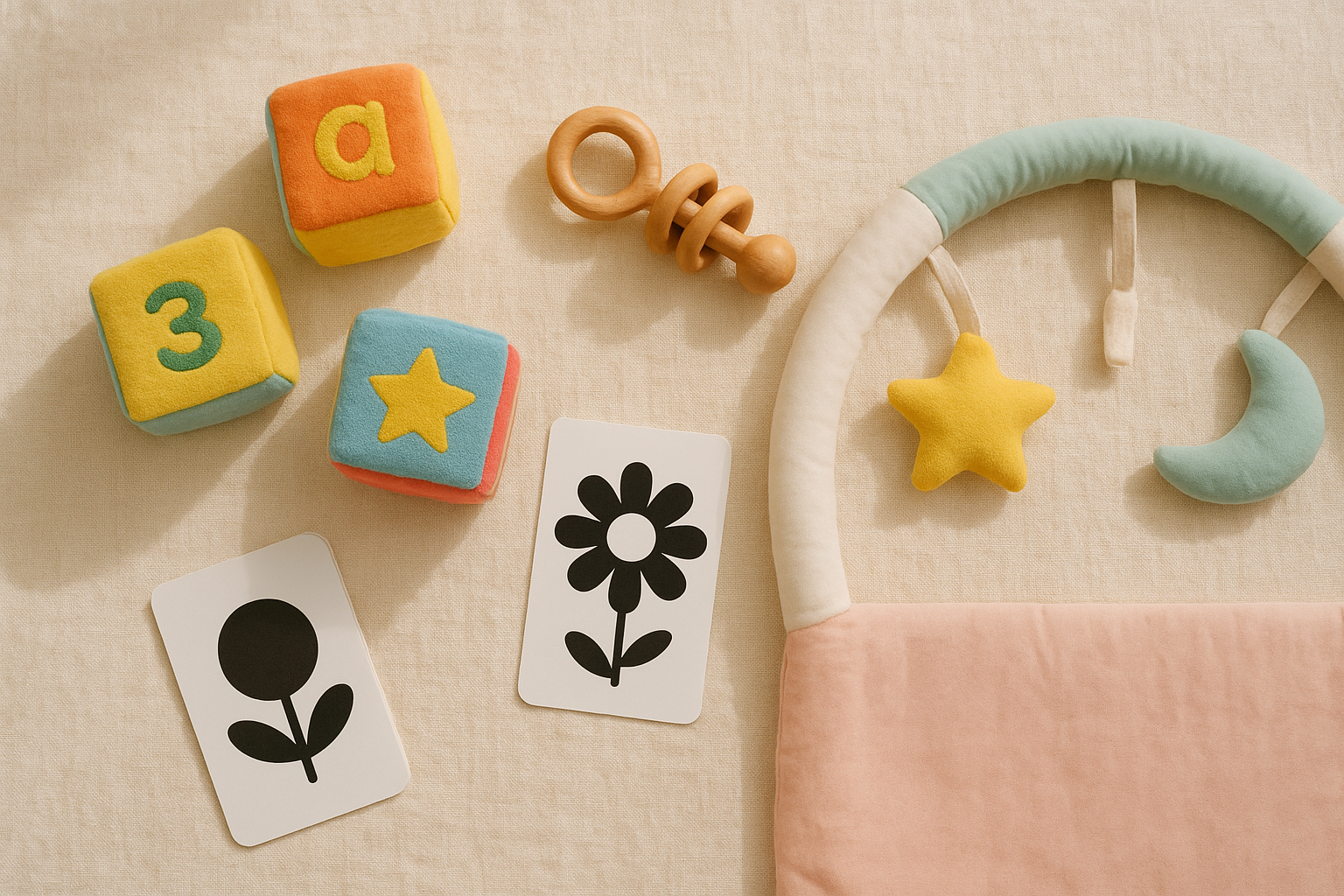
A curated selection of the best baby toys supports development from the very first weeks of life. For a deeper walkthrough, see our Best Online Stores for Children’s Clothing: The Complete Parent’s Guide.
What Are the Best Baby Toys, and Why Do They Matter?
The best baby toys are age-appropriate playthings that stimulate one or more areas of a child’s development—cognitive, physical, sensory, or social. According to the American Academy of Pediatrics, play is essential to healthy brain development and should begin from birth. Specifically, the AAP emphasizes that hands-on, open-ended play with simple, well-designed toys produces stronger developmental outcomes than screen-based entertainment for babies under 18 months.
Furthermore, the right toy at the right time can help babies hit key milestones—from grasping and tracking to problem-solving and language. Therefore, understanding what your baby needs at each stage is the first step toward making smart, meaningful toy choices.
Toy Safety: What Every Parent Must Know First
Before exploring specific picks, safety must come first. The U.S. Consumer Product Safety Commission (CPSC) reports that toy-related injuries send approximately 200,000 children to emergency rooms each year in the United States. Fortunately, most of these incidents are preventable with careful selection.
Look for toys that meet ASTM F963 toy safety standards—the primary U.S. benchmark for children’s product safety. In addition, always check for the following before buying:
- No small parts that could pose a choking hazard (anything smaller than 1.75 inches in diameter)
- No loose strings or cords longer than 12 inches
- BPA-free, non-toxic, and phthalate-free materials
- Age-appropriate labeling from the manufacturer
- Sturdy construction with no sharp edges or points
How to Choose the Right Toy Step by Step
Selecting the ideal toy does not have to be overwhelming. In fact, following a simple process makes it straightforward and even enjoyable.
- Identify your baby’s current developmental stage. Determine your baby’s age in months and look up key milestones—grasping, rolling, sitting, or walking—to understand which skills they are ready to practice.
- Check age-appropriateness and safety labels. Always read the manufacturer’s recommended age range and verify ASTM F963 certification or a CPSC-compliant safety label before purchasing.
- Match the toy type to a developmental goal. For example, choose stacking rings for fine motor skills, soft books for early language, or activity gyms for tummy time and sensory exploration.
- Inspect materials and construction quality. Examine the toy for sharp edges, small detachable parts, and toxic materials. Opt for BPA-free plastics or natural wood with child-safe finishes.
- Plan a toy rotation schedule. Select 5 to 10 toys at a time and rotate them every one to two weeks. This keeps your baby curious and prevents overstimulation.
Best Developmental Toys by Age Group
Every stage of infancy and toddlerhood brings new abilities and new opportunities for play. Consequently, the toys that delight a 2-month-old are very different from those that challenge a 12-month-old. Here is a breakdown of top picks for each phase.
Newborn to 3 Months: Sensory Stimulation
At this stage, babies are just beginning to focus their vision and respond to sound. Therefore, high-contrast black-and-white mobiles, soft rattles, and gentle musical soothers are ideal. These toys encourage visual tracking and auditory awareness—two of the earliest developmental milestones.
Soft, crinkle-fabric toys also provide tactile stimulation without overwhelming a newborn’s sensitive nervous system. Similarly, hanging gym toys with gentle movement introduce babies to cause-and-effect concepts for the very first time.
3 to 6 Months: Reaching and Grasping
By 3 months, babies begin reaching for objects with growing intention. As a result, teething rings, soft squeaky toys, and activity mats with hanging elements become favorites. These toys strengthen hand-eye coordination and encourage the pincer grip that supports later fine motor development.
In addition, tummy time toys—such as small mirrors and textured floor mats—support the core strength babies need to eventually sit and crawl. Exploring our safe and stylish baby gear guide can help you find products that pair well with this stage.
6 to 12 Months: Exploration and Problem-Solving
This is one of the most exciting developmental windows. Babies at this stage are sitting, crawling, and pulling themselves up. Consequently, they need toys that challenge them physically and mentally. Shape sorters, soft stacking blocks, pop-up toys, and simple cause-and-effect toys are all excellent choices.
Soft books with textures, flaps, and bold images also support early language development during this period. For more inspiration, browse the educational toy ideas parents will actually use on our site.
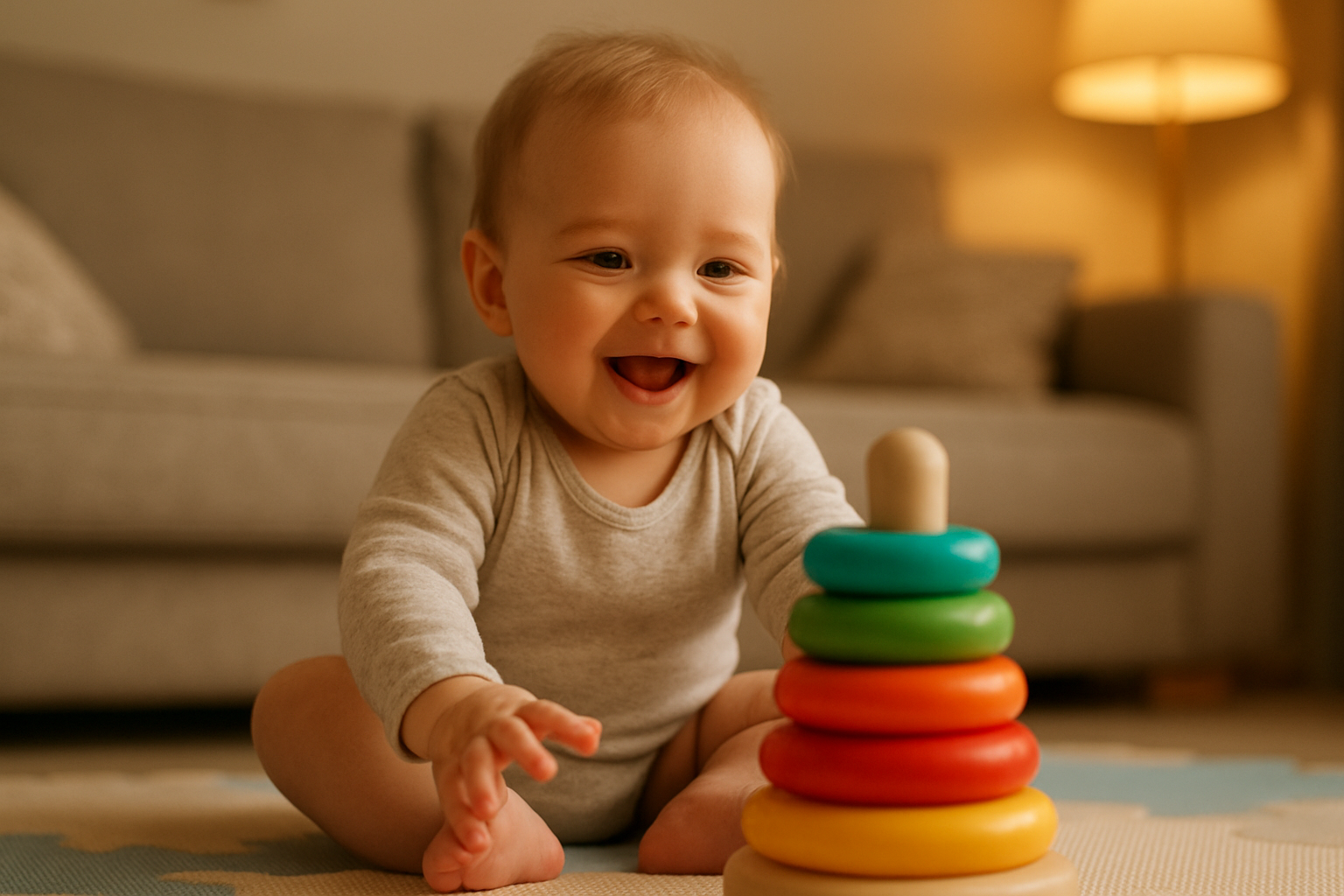
Stacking rings are among the best baby toys for building fine motor skills and problem-solving at 6 to 12 months.
12 to 24 Months: Active Play and Imagination
Toddlers between 12 and 24 months are walking, talking, and beginning to engage in pretend play. Therefore, push-and-pull toys, simple puzzles, musical instruments, and play kitchens are ideal. These toys nurture creativity, independence, and early social skills.
Bath time is also a wonderful opportunity for play at this age. Soft water squirt toys—like the cute frog bath toys for toddlers—make routine moments fun and engaging while supporting sensory development in a safe environment.
Sensory Toys: A Category Worth Understanding
Sensory toys—those specifically designed to stimulate touch, sight, sound, or movement—deserve special attention. These toys support sensory processing development, which is foundational for attention, learning, and emotional regulation throughout childhood.
Examples include textured silicone teethers, crinkle fabric animals, light-up musical toys, and water play sets. Notably, sensory play has been linked to stronger neural connections in early childhood, according to child development research published through organizations like the Zero to Three Foundation.
Wooden vs. Plastic Toys: Which Is Better?
This is one of the most common questions parents ask. In short, both materials can be excellent—it depends on the specific toy and how it is used.
Wooden toys are often more durable, eco-friendly, and free of synthetic chemicals. They also tend to be open-ended, encouraging imaginative play. However, plastic toys can offer greater sensory variety—bright colors, soft textures, and electronic features—and are generally easier to clean and sanitize. Above all, the most important factor is whether the toy meets current safety standards for your child’s age group.
Where to Find Quality Baby Toys Online
Finding trusted, affordable baby toys does not have to mean hours of research. everythingchildrensoutlet.com is a one-stop online destination for families across the United States, offering a thoughtfully curated selection of developmental toys, nursery essentials, and everyday baby care items. Every product is chosen with comfort, safety, and practicality in mind—making it easier for busy parents to shop with confidence.
In addition, you can explore the best baby essentials picks for 2025 to discover a broader range of must-have products for your growing child.
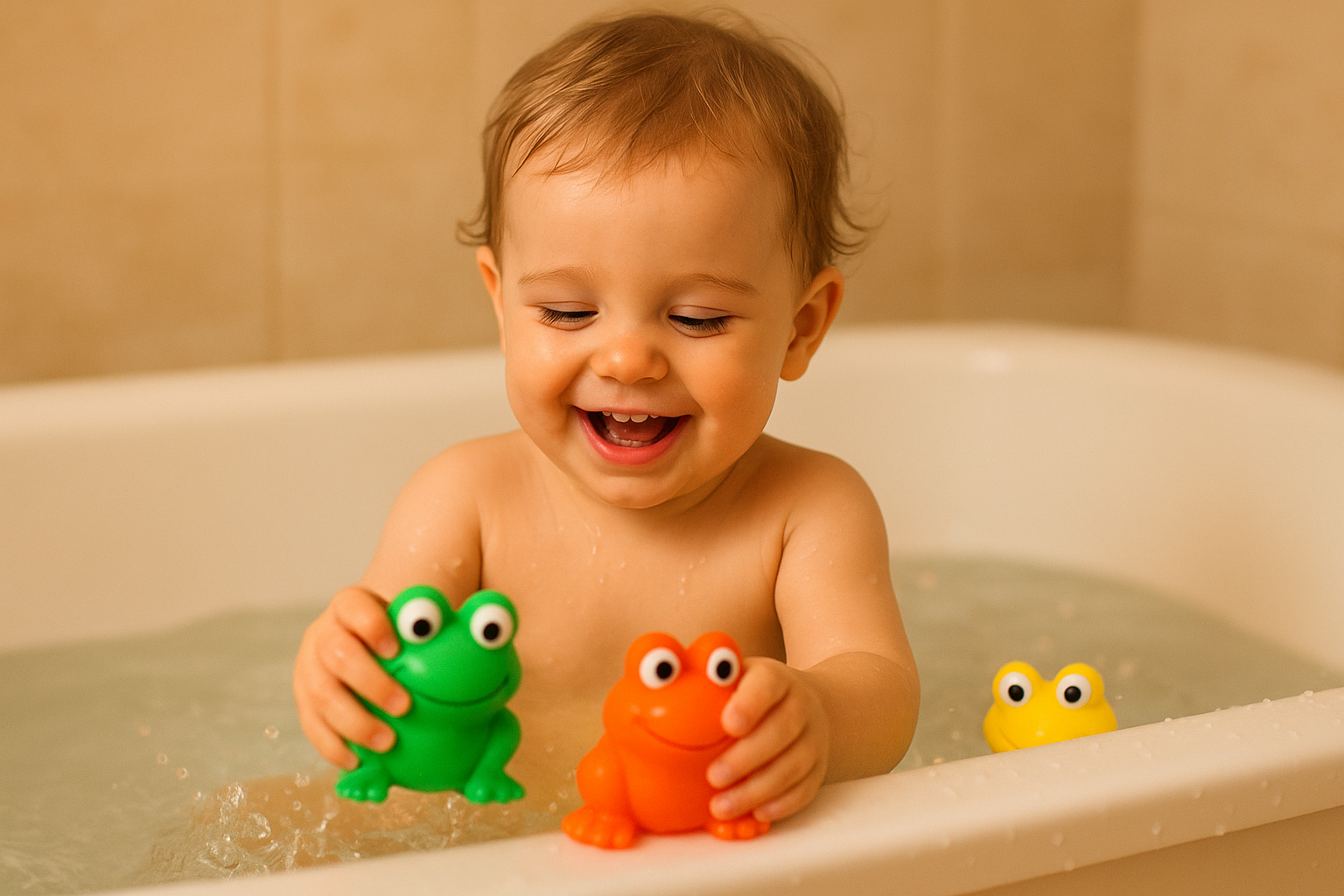
Soft bath toys make routine moments playful and support sensory development in toddlers.
Common Mistakes to Avoid When Buying Baby Toys
Even well-intentioned parents can fall into a few common traps when shopping for toys. Being aware of these pitfalls helps you spend smarter and choose better.
- Buying toys that are too advanced. A toy meant for a 2-year-old can frustrate a 9-month-old and even pose safety risks. Always check the age label.
- Over-buying. Research consistently shows that fewer, higher-quality toys lead to deeper, more focused play. Quantity is not the goal.
- Ignoring safety certifications. A visually appealing toy without proper certification may contain harmful materials or pose physical hazards.
- Choosing entertainment over development. Flashy lights and sounds are fun, but open-ended toys that require active engagement produce stronger developmental benefits.
Frequently Asked Questions About Best Baby Toys
What are the best baby toys for newborns?
The best baby toys for newborns include high-contrast black-and-white mobiles, soft rattles, and gentle musical soothers. Newborns respond most to bold patterns, soft textures, and calm sounds during their first weeks of life.
At what age can babies start playing with toys?
Babies can begin interacting with simple toys from birth. In the earliest weeks, they benefit from visual stimulation like mobiles and high-contrast cards. By 3 months, they can start reaching for soft rattles and hanging toys.
How do I know if a baby toy is safe?
Look for toys that meet ASTM F963 safety standards and are certified by the CPSC. Avoid toys with small parts, sharp edges, or loose strings, and always check the recommended age label on the packaging.
What toys help with baby brain development?
Sensory toys, stacking rings, shape sorters, and cause-and-effect toys all support baby brain development. These encourage problem-solving, fine motor skills, and spatial reasoning from an early age.
Are wooden toys better than plastic toys for babies?
Wooden toys are often more durable and eco-friendly, while plastic toys can offer more sensory variety and are typically easier to clean. Both can be excellent choices as long as they meet safety standards and are age-appropriate.
What are the best toys for a 6-month-old baby?
At 6 months, babies enjoy soft blocks, textured teething rings, activity gyms, and simple cause-and-effect toys like pop-up toys. These help develop hand-eye coordination and encourage exploration.
How many toys does a baby actually need?
Babies don’t need a large number of toys to thrive. Research suggests that rotating a small selection of 5 to 10 age-appropriate toys keeps babies more engaged and supports focused, deeper play.
What is the difference between sensory toys and regular toys?
Sensory toys are specifically designed to stimulate one or more of a baby’s senses—touch, sight, sound, or even smell. Regular toys may also provide sensory input, but sensory toys are intentionally crafted to support sensory processing development.
Are bath toys safe for babies and toddlers?
Bath toys can be safe when chosen carefully. Look for toys made from non-toxic, BPA-free materials with no small parts. Soft water squirt toys like the cute frog bath toys are a popular, safe choice for toddlers.
What common mistakes do parents make when buying baby toys?
Common mistakes include buying toys that are too advanced, prioritizing flashy features over developmental value, and overlooking safety certifications. It’s also easy to over-buy; a curated selection of quality toys is more beneficial than a large quantity.
What are the best educational toys for babies under 1 year?
The best educational toys for babies under 1 year include soft books with textures, activity gyms with hanging toys, shape sorters, and simple musical instruments. These encourage cognitive growth, sensory exploration, and early language development.
How often should I rotate my baby’s toys?
Toy rotation every 1 to 2 weeks is a widely recommended practice. Rotating toys keeps babies curious and engaged, and it also prevents overstimulation from having too many options available at once.
Conclusion: Choosing the Best Baby Toys With Confidence
Ultimately, finding the best baby toys comes down to three core principles: safety, developmental appropriateness, and genuine engagement. When you match the right toy to the right stage, you give your child a powerful tool for growth—and yourself the peace of mind that comes from making an informed choice. Whether you are outfitting a newborn nursery or refreshing a toddler’s play space, resources like everythingchildrensoutlet.com make it simple to find trusted, affordable options curated specifically for growing children. Start with quality, keep safety front of mind, and let the joy of play do the rest.