A toy bin that looked perfect online can turn into a daily hassle once it lands in your child’s room. It is either too deep for small hands, too tall for independent cleanup, or too flimsy for real-life use. That is why choosing kids room storage furniture is less about filling empty space and more about making everyday routines easier for both kids and parents.
The right storage setup helps a room feel calmer, safer, and easier to maintain. It can also support independence, since children are much more likely to put things away when they can actually reach and recognize where everything belongs. For families juggling toys, books, clothing, art supplies, and bedtime essentials in one room, smart furniture choices matter.
In a child’s room, storage has to work harder than it does in most other spaces. It is not just there to hide clutter. It needs to stand up to daily use, fit changing needs, and feel manageable for growing kids.
Safety comes first. Rounded edges, stable construction, tip-resistant designs, and easy-open compartments make a real difference in rooms where little ones climb, pull, and explore. If a storage piece looks stylish but feels wobbly or awkward, it is probably not the right fit.
Durability matters just as much. Kids are not gentle on furniture, and parents should not have to replace basics every year. A sturdy bookshelf, toy organizer, or storage bench can stay useful through several growth stages if it is built for everyday wear.
Then there is accessibility. Low shelves and clearly divided compartments often work better than oversized bins or tall cabinets. When children can see what they have and reach it without help, cleanup becomes more realistic. That is especially helpful for toddlers and preschoolers who are still learning routines.
Different families need different setups, but a few furniture categories tend to solve the most common messes.
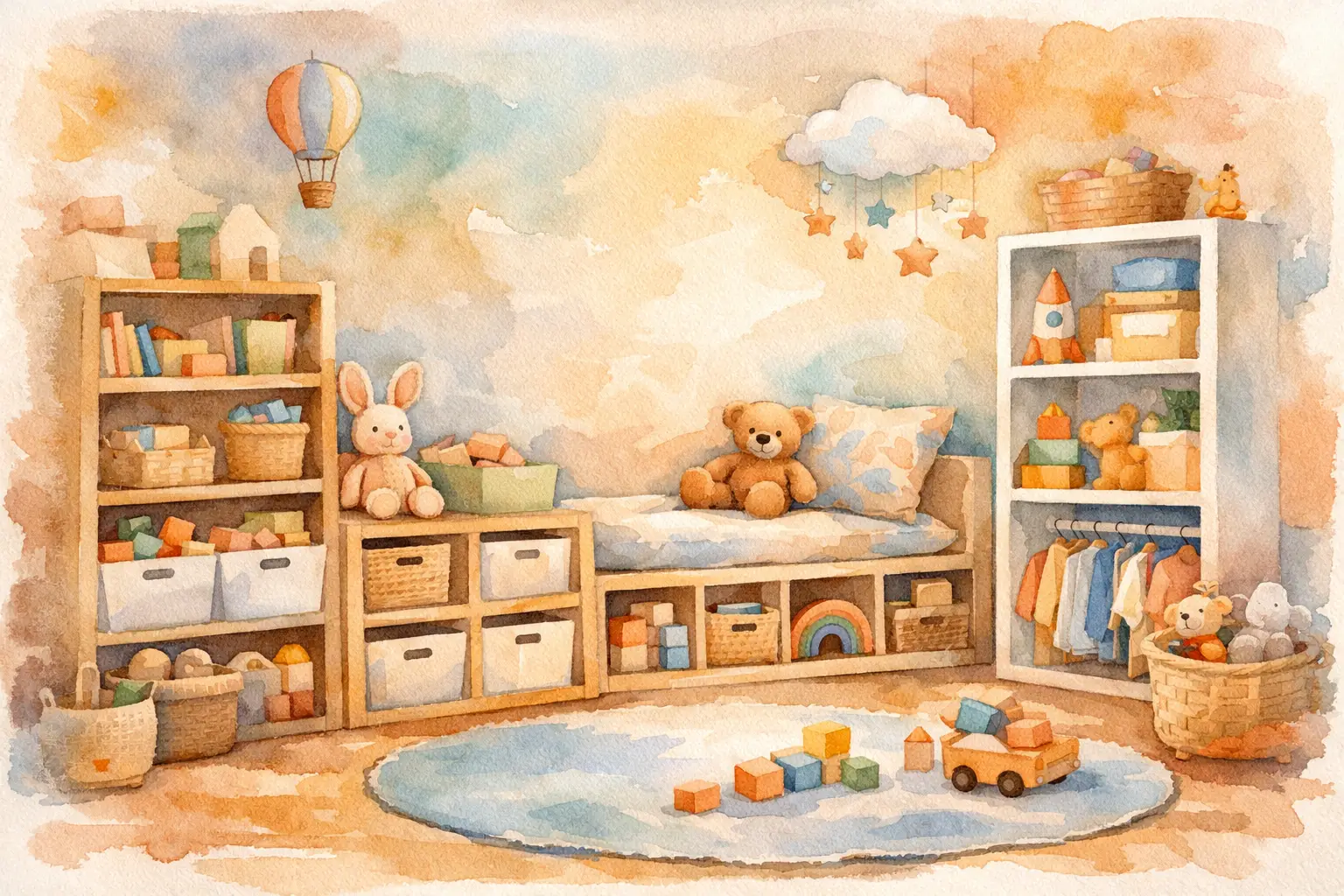
These are favorites for a reason. Open-top bins make it easy to sort dolls, blocks, cars, stuffed animals, and pretend play items without overcomplicating the system. For younger kids, picture-based sorting can work better than labels, especially if they cannot read yet.
The trade-off is that bins can become catch-alls if they are too large. Smaller compartments often help keep categories under control. If you want a room to stay manageable, several medium bins usually work better than one giant one.
A child-friendly bookshelf encourages reading and keeps books from ending up under the bed. Front-facing book displays are especially helpful for younger children because covers are easier to recognize than spines. Standard shelves can work too, but they should be low enough for safe access.
If your child has a growing library, look for shelves with room to adapt. A compact bookshelf may be perfect now, but a little extra capacity can save space and money later.
A storage bench earns its keep in smaller rooms. It provides seating, hidden storage, and a tidy visual break from open shelves. These are useful for stuffed animals, extra blankets, dress-up clothes, or seasonal items that do not need daily access.
The main thing to watch is the lid design. Soft-close features are worth it in a child’s room because they help protect little fingers.
Clothing storage matters just as much as toy storage, especially in rooms without large closets. A well-sized dresser can keep pajamas, socks, basics, and accessories organized without taking over the room.
Drawers should open smoothly but not too loosely, and the piece should be anchored properly. For younger children, shallow drawers can be easier to manage than deep ones packed with too much at once.
Cubby storage is one of the most flexible options for a child’s room. It can hold bins, books, puzzles, shoes, folded clothes, and display items all in one spot. As your child grows, the same unit can shift from toy storage to school supply and hobby storage.
That flexibility makes cubbies a strong long-term choice. They are especially useful if you want one piece that can evolve with your child instead of being replaced after a couple of years.
Age makes a big difference in what works.
For babies and toddlers, parents usually need storage that supports quick access and safety. That might mean low-profile bins for toys, a dresser with changing essentials close at hand, and a bookshelf anchored securely to the wall. At this stage, adults are doing most of the organizing, so convenience matters just as much as looks.
For preschoolers and early elementary kids, independence starts to matter more. This is the sweet spot for low cubbies, open shelving, and simple drawer systems. Children in this age range can help clean up, but only if the furniture matches their height and abilities.
Older kids often need a mix of hidden and open storage. School supplies, books, collections, clothes, and hobby items can quickly compete for space. Furniture that offers a few different storage styles tends to work best because not everything needs to be on display.
It is easy to get pulled in by color, cute themes, or matching sets, but safety and function should lead. A playful look is a bonus. A secure, usable piece is the priority.
Look for furniture with a stable base, smooth finishes, and hardware that feels solid. If a unit is tall, it should be anchored. If it includes lids, hinges, or heavy drawers, those features should be child-conscious. In high-use rooms, wipeable surfaces also make life easier.
It also helps to think about your own routine. If you want your child to clean up before bed, open storage may be more realistic than closed cabinets. If visual clutter stresses you out, a combination of bins and drawers can help keep the room looking calmer.
Kids’ rooms do not have to look plain to be practical. Storage furniture can absolutely feel cheerful, cozy, and fun. But the best style choices usually come from flexible basics instead of overly themed pieces. For a deeper walkthrough, see our Kids Furniture for Small Rooms That Works.
Neutral wood tones, soft white finishes, and simple colors tend to grow with a child more easily than character-heavy furniture. You can bring in personality through bedding, wall art, baskets, and decor while keeping the main storage pieces useful for years.
That is often the better value play for families who want affordability without feeling like they need a full room makeover every time interests change.
In smaller bedrooms or shared spaces, furniture needs to do more than one job. A bench with hidden storage, a dresser that doubles as a display surface, or a cubby unit that separates zones in a shared room can all save space.
Vertical storage can help, but only if it stays practical. A very tall shelf may add capacity, but it is not useful for everyday access if your child cannot reach most of it. In many cases, low and wide furniture creates a better balance between storage and independence.
If floor space is tight, focus on the categories that create the biggest mess first. For one family that may be toys. For another, it may be books, clothing, or craft supplies. The best system is the one that solves your real daily pain points.
Parents want furniture that looks good and lasts, but price still matters. That balance is where careful shopping pays off.
A lower price is only a good value if the piece holds up to regular use. At the same time, the most expensive option is not automatically the best one for a child’s room. Practical design, safe construction, and adaptable storage often matter more than premium finishes.
When shopping, think in terms of lifespan. Will this piece still work next year? Could it transition from toddler toys to school supplies? Can it fit a different room later if needed? Those questions often point toward smarter purchases than shopping only by appearance. For a deeper walkthrough, see our 12 Educational Toys Ideas Parents Will Use.
For families looking for affordable, useful options, a curated children’s retailer like Everything Childrens Outlet can make the process feel simpler by keeping the focus on pieces designed for real family life.
The best kids room storage furniture does not just make a room look tidy for a photo. It helps mornings move faster, cleanup feel less like a battle, and children take small, confident steps toward doing more on their own. When storage supports the way your family actually lives, the whole room works better.